


What Are Perpetual Futures?
Perpetual futures — commonly called perps — are a type of cryptocurrency derivative that lets traders speculate on the future price of an asset without ever owning the underlying
token. Unlike traditional futures contracts, perpetual futures have no expiry date, meaning a position can be held open indefinitely as long as it stays above the liquidation
threshold.
Perps were first introduced to crypto markets by BitMEX in 2016 and have since become the dominant form of crypto derivative trading. Today, perpetual futures account for the majority
of daily trading volume across both centralized exchanges and decentralized perps exchanges like Hyperliquid and Aster DEX.
How Do Perpetual Futures Work?
A trader deposits collateral (margin) into a perps exchange or self-custody wallet.
They open a position — either long (betting the price will rise) or short (betting it will fall).
They select a leverage multiplier (e.g., 10x, 50x, 100x), which determines how large their position is relative to their margin.
The exchange calculates the position's profit and loss in real time as the market price moves.
At regular intervals (typically every 8 hours), a funding rate is exchanged between longs and shorts to keep the contract price aligned with the underlying spot price.
The trader can close the position at any time to realize profits or losses.
If losses exceed the margin, the position is liquidated automatically.
Key Properties of Perpetual Futures
No Expiry Date
Unlike traditional futures, which settle on a fixed date, perpetual futures can be held indefinitely.
Leverage
Perps allow traders to open positions many times larger than their collateral — often up to 100x or more.
Funding Rate Mechanism
A periodic payment between longs and shorts keeps the perp price close to the spot price. When the perp trades above spot, longs pay shorts; when below spot, shorts pay longs.
Bidirectional Trading
Traders can profit from both rising and falling markets by opening long or short positions.
Perpetual Futures vs Spot Trading
| Feature | Perpetual Futures | Spot Trading |
|---|---|---|
| Ownership | No — synthetic exposure | Yes — you own the token |
| Leverage | Up to 100x or more | Typically none |
| Directions | Long or short | Long only |
| Expiry | None | N/A |
| Funding cost | Periodic funding rate | None |
| Risk of liquidation | Yes | No |
Common Use Cases
Speculation — betting on short-term price movements with leverage
Hedging — offsetting spot holdings with opposing perp positions
Arbitrage — exploiting price differences between perp and spot markets
Perpetual Futures and Trust Wallet
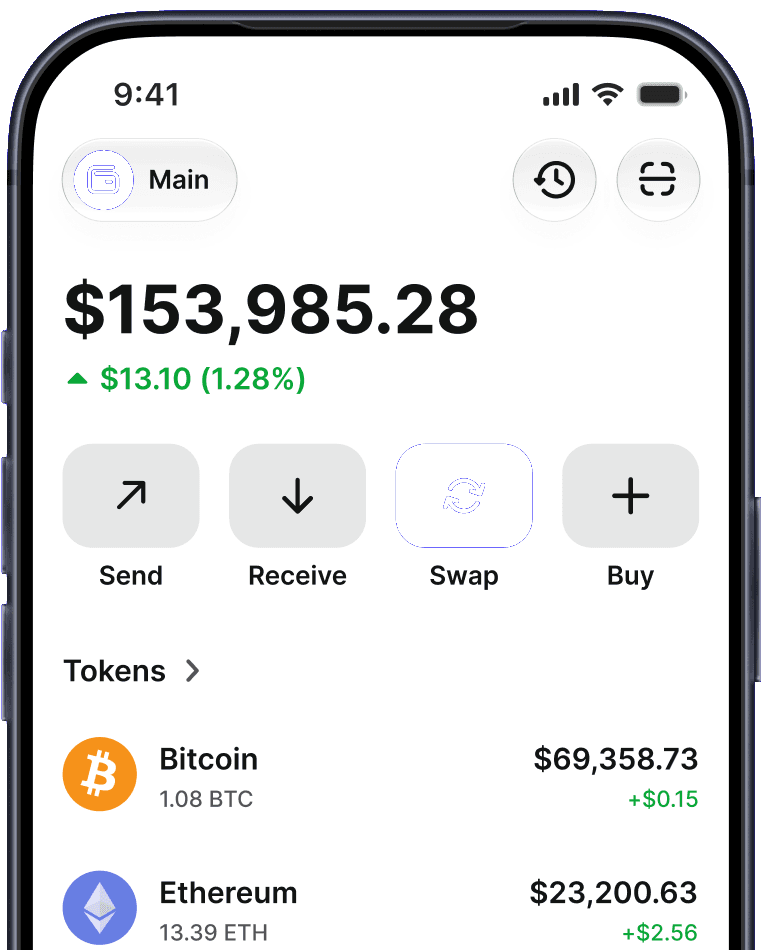
Trust Wallet supports perpetual futures trading via native integrations with Hyperliquid and Aster DEX. Users can open long or short positions on 100+ markets — including BTC, ETH, and real-world assets — while keeping full self-custody of their funds. Perpetual futures trading is not available in all regions.