

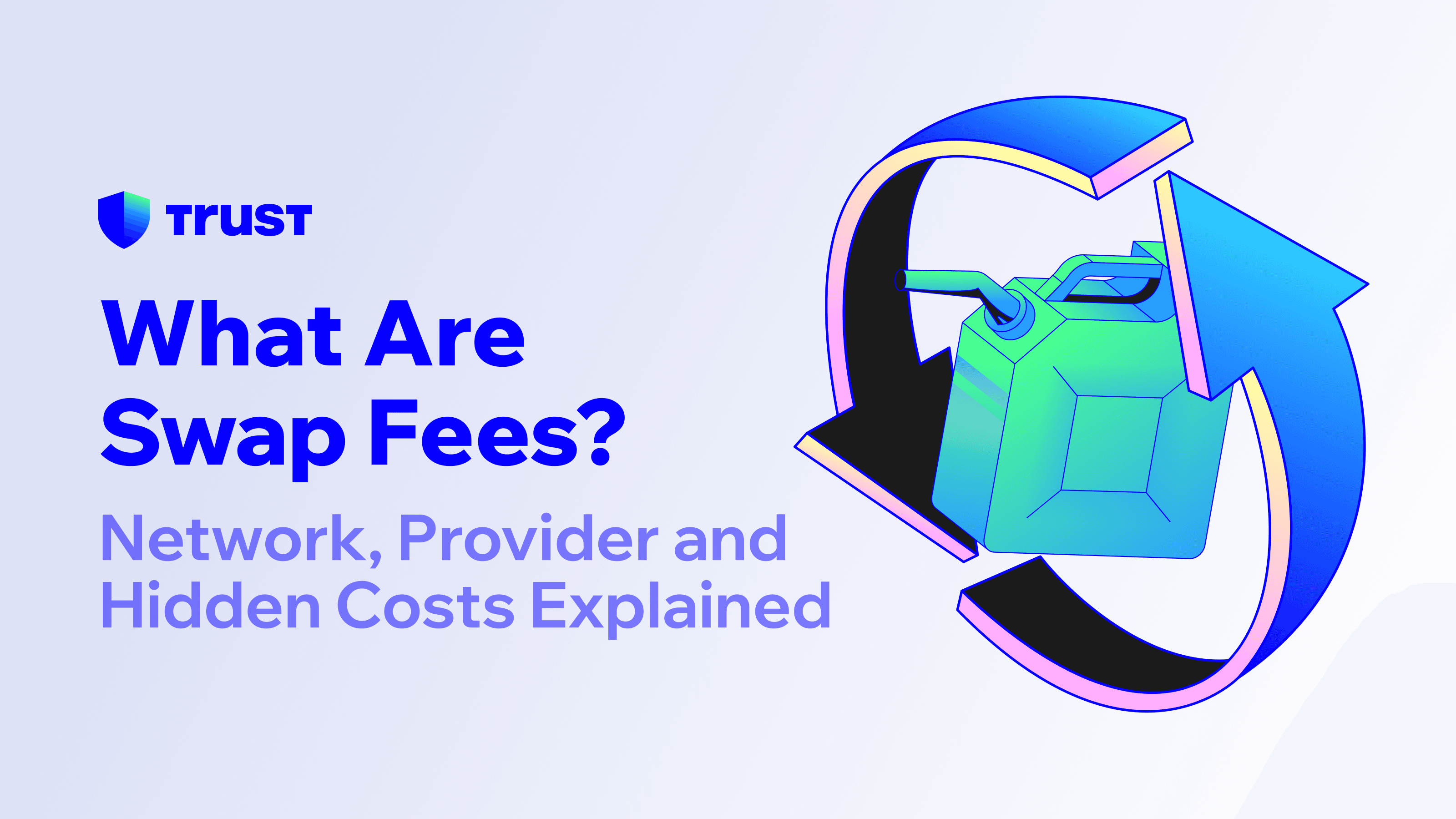
When you swap crypto, you pay three kinds of cost: the network gas fee, which varies with how congested the blockchain is; a provider or liquidity fee taken by the service routing your trade; and the spread or price impact, which depends on how much liquidity is available for your pair. A good swap interface bakes all three into the quoted "you receive" amount — so compare that figure between quotes, not the headline exchange rate.
What is the network gas fee?
Every swap is a blockchain transaction, and blockchains charge a gas fee to process it. This fee goes to the network's validators, not to your wallet or the swap provider, and it's paid in the chain's native token — ETH on Ethereum, BNB on BNB Chain, SOL on Solana.
Gas is the most variable cost in a swap. It depends on the chain you're using and how busy it is at that moment: the same swap can cost cents on a low-fee network and considerably more on Ethereum during peak demand. Gas also applies whether or not your trade succeeds — a reverted transaction still consumed network resources, so the fee is not returned.
What is the provider or liquidity fee?
The service executing your swap — a decentralized exchange, an aggregator, or the liquidity providers behind them — takes a fee for facilitating the trade. On most decentralized exchanges, this fee compensates the people who supply tokens to liquidity pools; aggregators or interfaces may add a routing fee on top.
There is no universal number here: the fee varies by provider, by route, and sometimes by token pair. That's exactly why the quoted output amount matters — it already reflects whatever the route charges, so two quotes can be compared directly without decoding each provider's fee schedule.
What are spread and price impact?
Spread and price impact are the least visible cost because they're not listed as a "fee" at all — they show up as a slightly worse exchange rate.
Most on-chain swaps execute against liquidity pools priced by an automated market maker. The bigger your trade is relative to the pool, the more your own order moves the price against you. Swapping a large amount in a thin pool can cost more in price impact than in gas and provider fees combined. Deep, liquid pairs (major tokens on major chains) have minimal impact; long-tail tokens can have a lot.
Are there hidden costs to watch for?
A few costs catch people out because they sit outside the main quote:
| Cost | When it applies | How to handle it |
|---|---|---|
| Approval transaction | First time you swap a given ERC-20 token | A separate, one-time approval with its own gas fee |
| Failed transaction gas | Swap reverts, often from price movement | Set a sensible [slippage](https://trustwallet.com/glossary/slippage) tolerance; refresh stale quotes |
| Slippage beyond the quote | Price moves between quote and execution | The "minimum received" figure is your floor — check it |
| Gas on the destination chain | Cross-chain swaps | You may need the destination chain's native token to move funds later |
None of these are tricks — they're properties of how blockchains work — but a quote can look cheap while the total journey costs more.
How do you compare swap quotes fairly?
Ignore the headline rate and marketing claims of "zero fees" — a route with no explicit fee can still deliver less through a worse rate. Instead:
Enter the same input amount in each interface.
Compare the "you receive" or "minimum received" figure.
Check the network fee shown alongside it.
Prefer the quote that delivers the most output after everything.
Checking swap fees in Trust Wallet
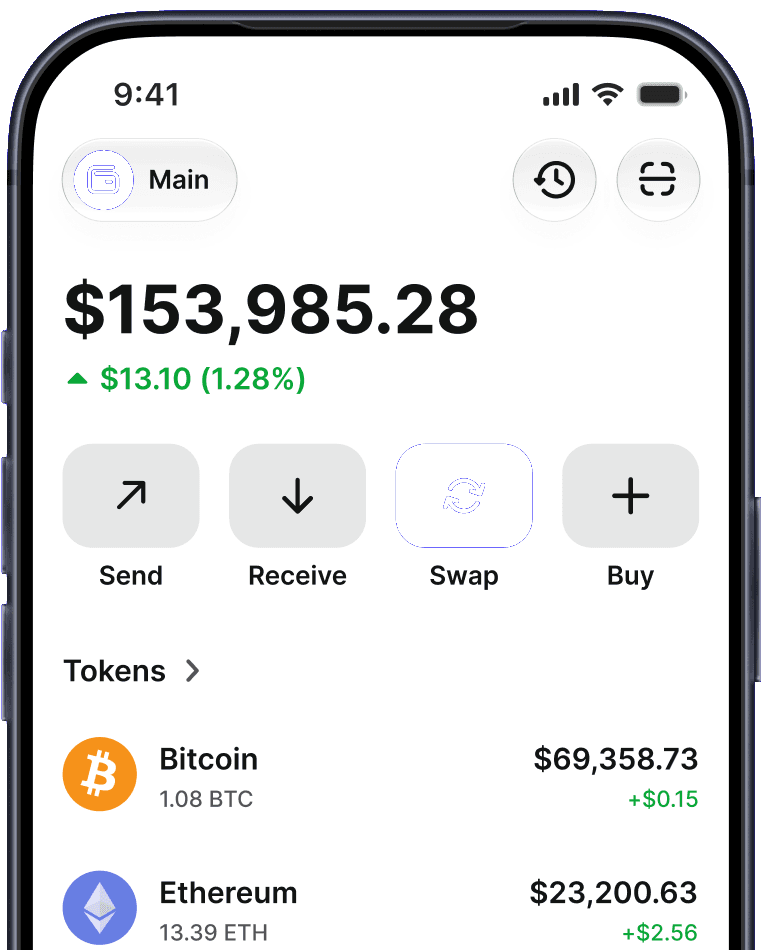
Trust Wallet's built-in swap shows the full picture before you sign: the quoted output, the network fee, and an adjustable slippage tolerance, across 100+ blockchains. The Security Scanner checks the transaction against known risk signals before you confirm — a prompt to look closer, not a guarantee. See how it works at trustwallet.com/swap.
Disclaimer: Content is for informational purposes and not investment, financial, or tax advice. Web3 and crypto come with risk. Please do your own research with respect to interacting with any Web3 applications or crypto assets. View our terms of service.