

Key Takeaways:
Wallet security changes the concept of ownership from institutional control to individual sovereignty.
Self-custody wallets enable true ownership by giving you cryptographic proof of ownership that no authority can override.
Trust Wallet combines self-custody security with proactive protection features like the Security Scanner and transaction warnings to make Web3 ownership accessible.
Web3 promises something fundamentally different from today's internet: true ownership. You own your assets, control your identity, and manage your data without intermediaries. The promise only works if wallet security protects that ownership. Without proper security, Web3 becomes just another system where you depend on someone else's permission. In this article, we explore how wallet security enables real ownership and shapes the future of digital control.
What Web3 Ownership Actually Means
Traditional internet platforms own everything. When you create content on social media, the platform owns it. When you buy digital goods in games, the company controls them. When you store data in cloud services, they decide access rules. Web2 gave you accounts, not ownership.
Web3 changes this. Ownership moves from platforms to people through cryptographic proof recorded on blockchains. When you hold assets in a self-custody wallet, you possess the private keys that mathematically prove ownership that exists independently of any institution.
Ownership, however, requires security. Private keys that prove ownership also become targets for theft. If someone steals your keys, they steal your ownership. Blockchain transactions are irreversible by design. Your wallet security directly determines whether your Web3 assets remain under your control.

How Wallet Types Shape Control
The type of wallet you use determines who controls your assets. Your choice shapes whether you experience true ownership or a different form of institutional control.
Custodial wallets recreate Web2 dynamics. Exchange platforms hold your private keys and grant you account access. You depend on their security, policies, and continued operation. When platforms get hacked, face regulatory pressure, or make business decisions, you could lose access to your digital assets.
Self-custody wallets enable true ownership. You hold your private keys directly on your device. Your wallet encrypts them using hardware-level security that isolates keys from other software. No one can access keys without breaking device-level encryption. Trust Wallet follows a self-custody model, storing encrypted keys locally and never transmitting them to servers.
Self-custody’s security architecture enables ownership that survives beyond platforms. If a self-custody wallet shuts down tomorrow, your ownership continues. The security features that protect your keys also protect your independence.

Security Features That Enable Ownership
Wallet security creates the foundation for Web3 ownership. Without it, the promise of controlling your own assets falls apart. Three core security mechanisms make ownership real.
Your wallet encrypts your private keys using hardware security built into your device. Device-level encryption lets you control access completely. Nobody verifies your identity, approves your transactions, or maintains your account. Math replaces institutions. You own your assets because you hold the cryptographic proof, and that proof stays secure on your device.
Your recovery phrase preserves ownership across time and devices. The 12-24 word seed phrase generates your private keys and works with any compatible wallet. If you break your phone, you can restore your wallet on a new device. If you want to switch wallet apps, your assets move with you. The phrase ensures your ownership survives hardware failures, lost devices, and software changes.
Transaction signing puts you in control of every asset movement. Your wallet requires explicit approval before any transfer happens. Malware on your device can't drain your funds without your fingerprint, face scan, or PIN. You decide when assets move and where they go.

How Security Shapes Digital Identity
Web3 ownership extends beyond financial assets into identity and data. Your wallet becomes your digital identity, proving who you are across applications without depending on centralized authorities. Security determines whether this identity remains under your control.
Traditional digital identity depends on platforms. Google, Facebook, and governments issue credentials that they control. They track how you use identity, restrict where it works, and revoke access based on their policies. You possess login credentials, not identity ownership.
Self-custody wallets enable self-sovereign identity. Security features like zero-knowledge proofs let you verify age, residency, or qualifications without exposing your full identity details. When you connect to dApps, your wallet grants temporary permissions you can revoke anytime.
Security features that protect your wallet protect your entire digital presence. Compromised wallets mean stolen identity, not just stolen money. As Web3 expands into tokenized credentials, professional certifications, and access rights, wallet security shapes your ability to own and control every aspect of digital life.
How Trust Wallet's Security Scanner Protects You
Trust Wallet's Security Scanner shows how modern wallet security enables confident ownership. The Security Scanner analyzes every transaction before you complete it. When you send funds, connect to a dApp, or interact with a smart contract, the scanner checks addresses against continuously updated threat databases.
High-risk transactions trigger clear warnings that explain the specific threat. You stay in complete control. The scanner provides information, but you make the final decision. This balance defines modern wallet security: strong protection that enables confident participation rather than creating barriers to use.

Security Enables Participation
Strong security protects what you own and enables you to use Web3 confidently. When you trust your wallet's protection, you participate in DeFi, collect NFTs, stake assets, and connect to dApps without fear. Security removes friction between wanting to participate and actually doing it.
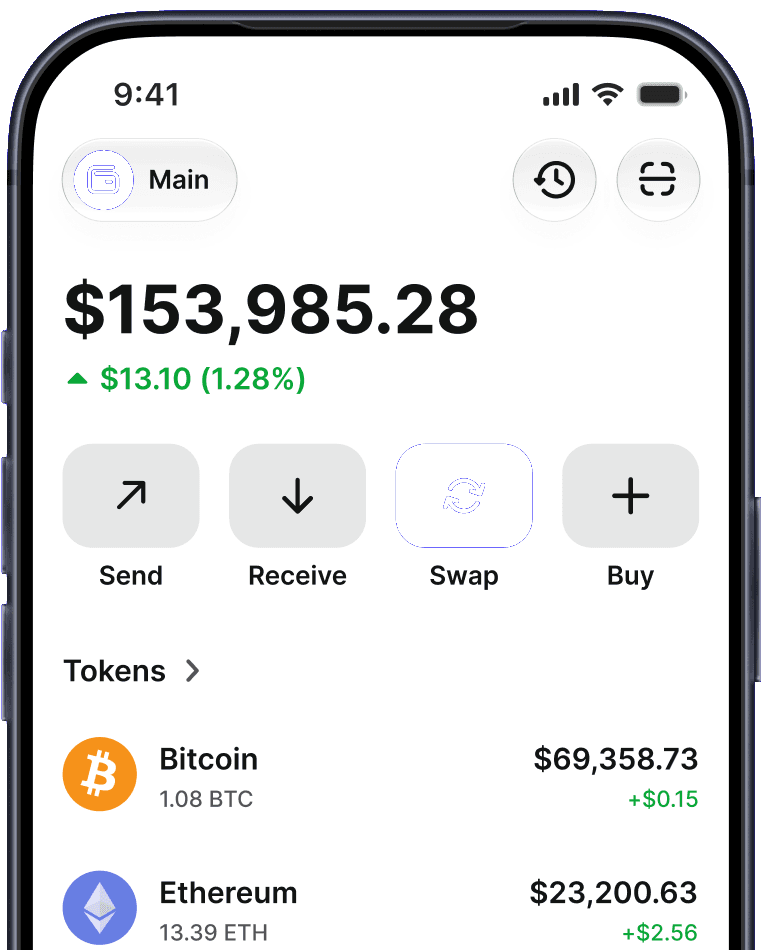
Modern wallets balance security with accessibility. Trust Wallet combines self-custody security with features like transaction scanning, address verification, and permission management. You can swap tokens, connect to thousands of dApps, and manage assets across 100+ blockchains and stay in full control. Security enables action rather than preventing it.
Balance matters for Web3's future. If security requires technical expertise, ownership remains theoretical for most people. If security prevents normal use, people choose convenience over control. Wallets that make security invisible while keeping it strong enable mainstream adoption. Trust Wallet's approach shows that serious security and user-friendly design work together to make Web3 ownership accessible.
The Future Web3 Security Shapes
Wallet security determines whether Web3 fulfills its ownership promises or recreates Web2's centralized control under new names. As more aspects of digital life move on-chain — from financial assets to real-world property to professional credentials — security infrastructure shapes who participates and who stays excluded.
Self-custody creates ownership that survives beyond any single company, platform, or regulatory environment. Your private keys represent mathematical proof of control that no authority can override. As Web3 expands, security-enabled ownership extends from cryptocurrencies to tokenized real estate, from social media content to digital identity credentials.
The wallets that shape Web3's future combine uncompromising security with genuine accessibility. They prove that protecting ownership and enabling participation aren't competing goals. Security is the foundation that makes digital sovereignty practical rather than theoretical.
Download Trust Wallet Disclaimer: Content is for informational purposes and not investment advice. Web3 and crypto come with risk. Please do your own research with respect to interacting with any Web3 applications or crypto assets. View our terms of service. Join the Trust Wallet community on Telegram. Follow us on X (formerly Twitter), Instagram, Facebook, Reddit, Warpcast, and Tiktok
Note: Any cited numbers, figures, or illustrations are reported at the time of writing, and are subject to change.