

BLOG_PAGE.section-article.category.academy
Fungible vs Non-Fungible Tokens: Explained
Share post
In Brief
Fungible tokens (Bitcoin, ERC20) are interchangeable. Non-fungible tokens (NFTs, ERC721) are unique. Compare uses, examples, and key differences with Trust Wallet.
Fungible tokens are interchangeable digital assets — each unit has identical value and properties, like Bitcoin (BTC) or Ethereum (ETH). Non-fungible tokens (NFTs) are unique, one-of-a-kind assets — each has distinct attributes and cannot be exchanged on a one-to-one basis, like CryptoPunks or Bored Ape Yacht Club. The technical difference: fungible tokens typically follow the ERC20 standard on Ethereum, while NFTs follow the ERC721 standard. This guide compares both, with examples, use cases, and how each fits into the crypto ecosystem.
Key Takeaways
Fungible tokens are interchangeable assets where every unit has identical value (Bitcoin, Ethereum, USDT).
Non-fungible tokens (NFTs) are unique digital assets where each token has distinct attributes (CryptoPunks, Bored Ape Yacht Club).
The technical difference: fungible tokens follow the ERC20 standard, NFTs follow the ERC721 standard — both on Ethereum.
A wallet that supports ERC20 typically also supports ERC721, since both are smart contracts on the same blockchain.
Fungible vs Non-Fungible Tokens — Quick Comparison
| Feature | Fungible Token (ERC20) | Non-Fungible Token (ERC721) |
|---|---|---|
| Interchangeable | Yes | No |
| Each unit identical | Yes | No |
| Divisibility | Highly divisible (often 18 decimals) | Indivisible (whole tokens only) |
| Standard introduced | 2015 | 2018 |
| Primary use | Currency, DeFi, governance, stablecoins | Digital art, collectibles, gaming, identity |
| Examples | BTC, ETH, USDT, USDC, LINK | CryptoPunks, Bored Ape Yacht Club, Azuki |
What are Fungible Tokens?
Fungible tokens are digital assets that are interchangeable and possess equal value, making them a core building block of the cryptocurrency ecosystem. They follow a standardized set of rules, allowing them to be easily exchanged and used within various applications. The most prominent examples are cryptocurrencies like Bitcoin and Ethereum, where each unit is identical and can be substituted for another without any loss of value.
The dominant standard for fungible tokens on the Ethereum blockchain is ERC20. Introduced in 2015, ERC20 provides a uniform set of rules for creating and managing fungible tokens. ERC20 tokens facilitate seamless transactions and interactions across platforms and wallets, ensuring interoperability within the Ethereum ecosystem. Most stablecoins (USDT, USDC, DAI) and DeFi governance tokens (UNI, AAVE) are issued as ERC20 tokens.
What are Non-Fungible Tokens (NFTs)?
Non-Fungible Tokens (NFTs) are a unique category of digital assets that represent ownership of specific items or content on the blockchain. Unlike fungible tokens, NFTs are distinct and cannot be exchanged on a one-to-one basis. This uniqueness makes NFTs particularly valuable for representing ownership of digital art, collectibles, and other one-of-a-kind items.
The most widely recognized standard for creating NFTs on the Ethereum blockchain is ERC721. Introduced in 2018, ERC721 provides a framework for defining unique tokens, ensuring each token has distinct attributes and ownership records. The ERC721 standard is pivotal in establishing NFT functionality, enabling the creation, transfer, and management of unique digital assets. A newer hybrid standard, ERC1155, allows a single smart contract to manage both fungible and non-fungible tokens at once — commonly used in blockchain gaming.
Key Differences Between Fungible and Non-Fungible Tokens
Fungibility vs. Non-Fungibility
Fungible Tokens
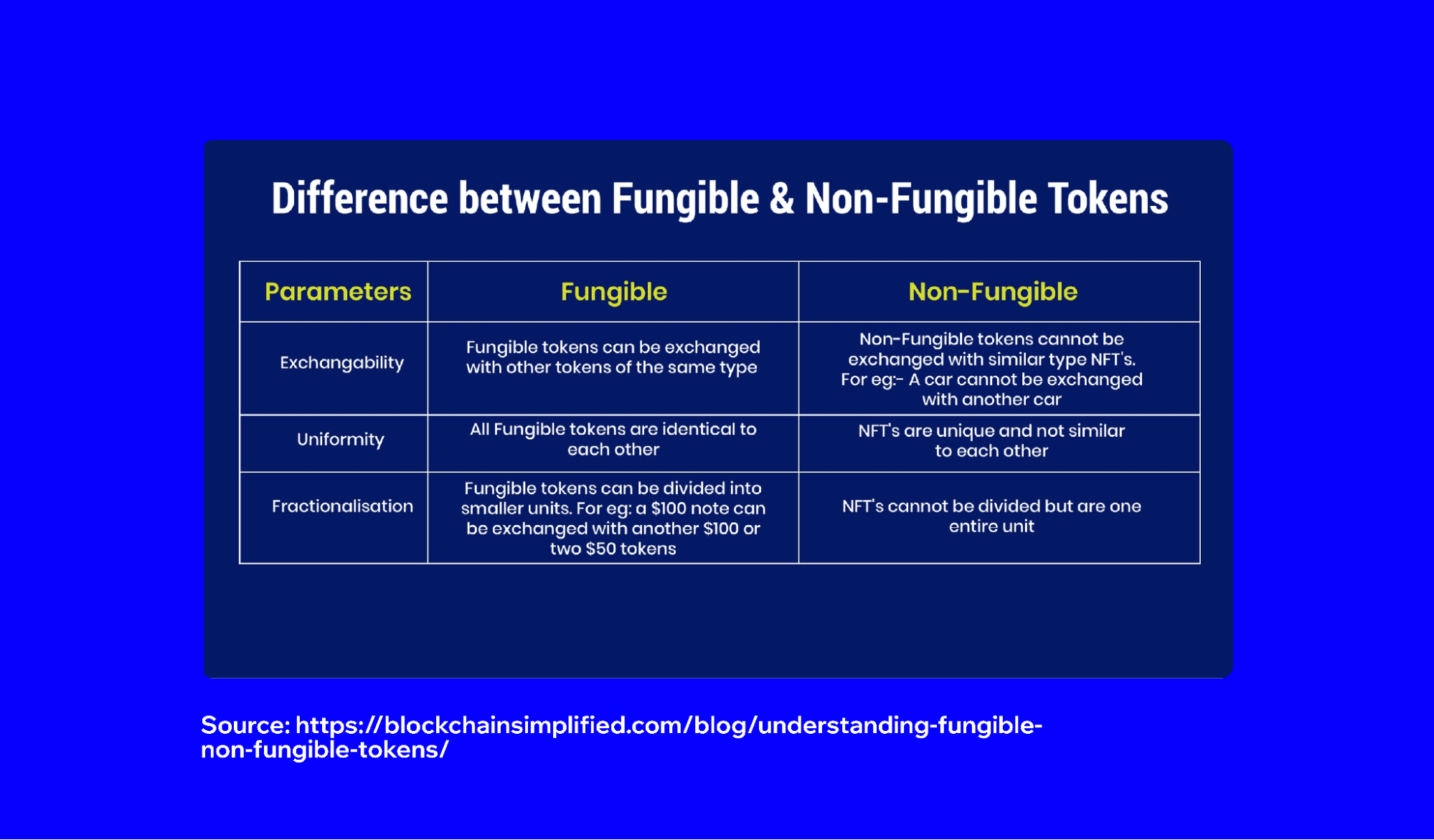
Fungible tokens are interchangeable, meaning each token is identical and can be exchanged for another of the same type without any loss of value. One unit of a fungible token is equal in value to another unit of the same token.
Non-Fungible Tokens (NFTs)
NFTs represent unique assets that cannot be exchanged on a one-to-one basis. Each NFT has distinct attributes that differentiate it from others, making it one-of-a-kind.
Use Cases
Fungible Tokens
Fungible tokens have a range of applications, including as cryptocurrencies like Bitcoin (BTC) and Ethereum (ETH), which facilitate peer-to-peer transactions and serve as stores of value. They also function as utility tokens within decentralized applications (dApps), providing access to specific services or governance features. Additionally, stablecoins such as Tether (USDT) and USD Coin (USDC) offer a stable medium of exchange by being pegged to stable assets like the US dollar, mitigating the volatility commonly associated with other cryptocurrencies.
Non-Fungible Tokens (NFTs)
NFTs have diverse applications, including digital art (where artists can create and sell unique works while retaining royalties from secondary sales), digital collectibles (virtual trading cards and limited-edition items that can be traded and appreciate in value), and gaming (where NFTs represent in-game items, characters, and skins that players can own, trade, and use across different games).
Examples of Fungible Tokens
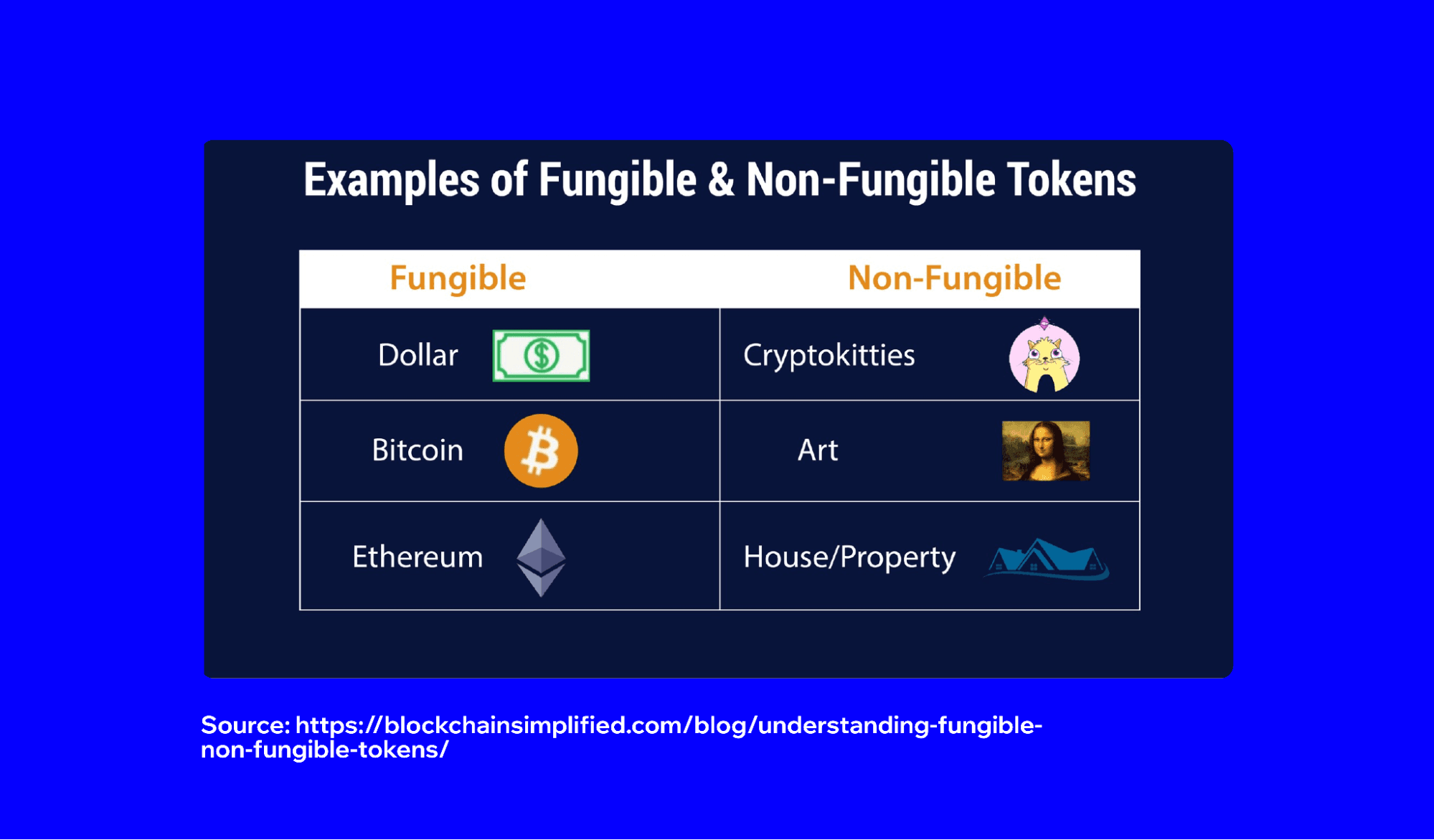
Some widely recognized fungible tokens include:
Bitcoin (BTC)
Bitcoin is the first and most well-known cryptocurrency. Launched in 2009 by an anonymous entity known as Satoshi Nakamoto, Bitcoin introduced the concept of a decentralized digital currency. Each Bitcoin is interchangeable, serving as a digital currency and a store of value.
Ethereum (ETH)
Ethereum is a versatile blockchain platform that enables the creation of smart contracts and decentralized applications (dApps). Its native token, Ether (ETH), is used to facilitate transactions and computational services on the Ethereum network. Like Bitcoin, Ether is fungible — one unit of ETH holds the same value and utility as another. Ethereum's flexibility has made it the foundation for many other blockchain projects.
Examples of Popular NFTs
Some well-known examples of NFTs include:
CryptoPunks
Launched in 2017 by Larva Labs, CryptoPunks features 10,000 unique pixel art characters, including humans, zombies, and apes. These early NFTs are highly sought after, with some selling for millions of dollars, making them iconic in digital art history.
Bored Ape Yacht Club (BAYC)
Introduced by Yuga Labs in 2021, BAYC consists of 10,000 unique cartoon apes with distinct traits. Known for its vibrant community and exclusive membership perks, it has become a cultural phenomenon with high-profile owners.
How to Connect Your Trust Wallet to NFT Marketplaces
Connecting your Trust Wallet to NFT marketplaces allows you to seamlessly manage and trade your digital assets. Here's a simple guide to help you get started:
Set up your Trust Wallet: If you haven't done so already, download and set up your Trust Wallet app. Ensure your wallet is secure and you have backed up your recovery phrase.
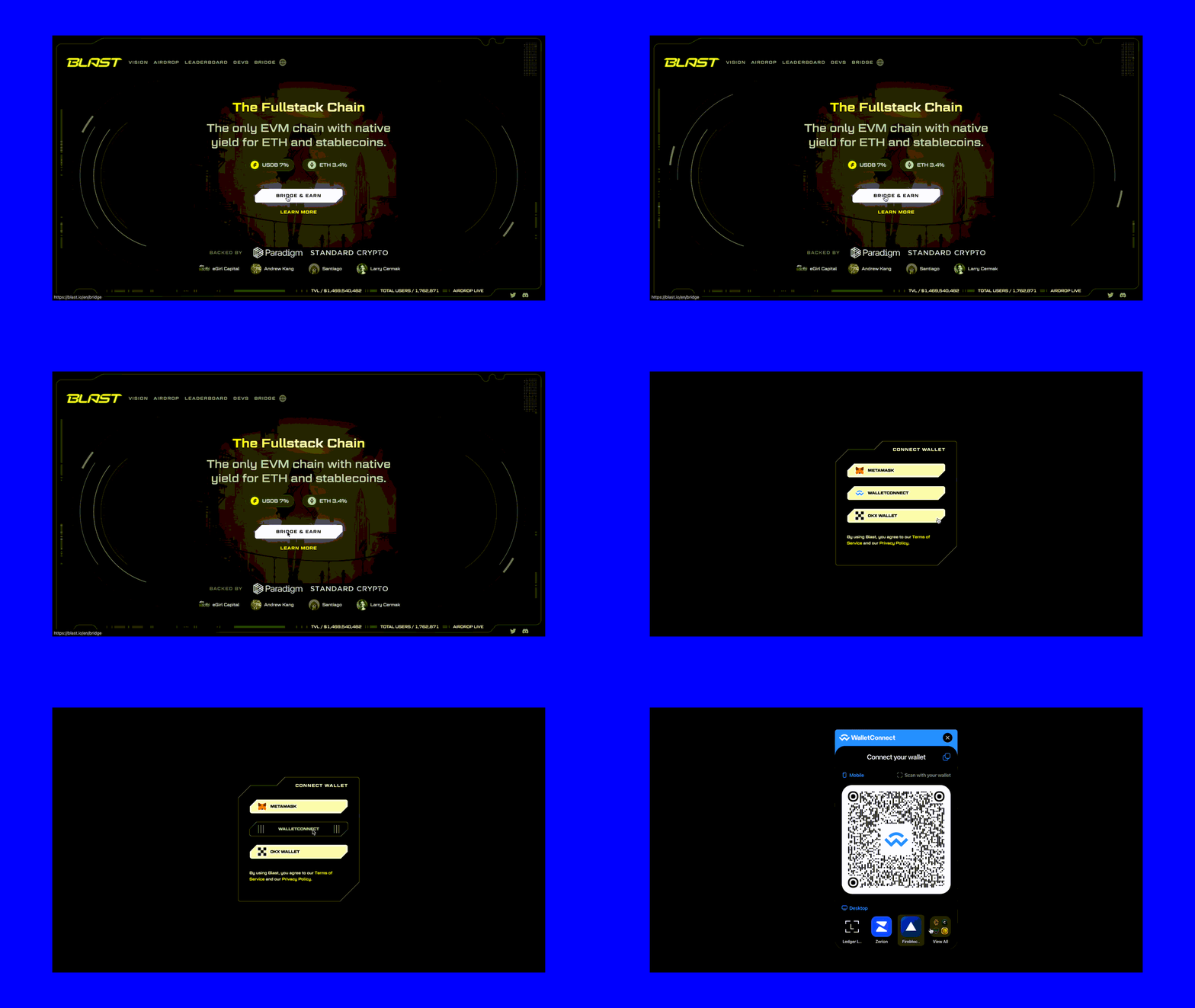
Navigate to the NFT marketplace: Open your preferred NFT marketplace on your desktop browser. In this example, we use Blast.
Connecting your Trust Wallet
If you're using the mobile app, open Trust Wallet and select the "Browser" tab, then search "Nouns NFT" or enter the URL, blast.io, into the search bar, and select the "Done" button. If you're using the browser extension, simply navigate to the blast.io URL site.
Follow the steps below to connect your wallet:
Select "Bridge & Earn."
Select "Connect Wallet."
Select "WalletConnect."
Open your Trust Wallet mobile app, and scan the QR code to connect.
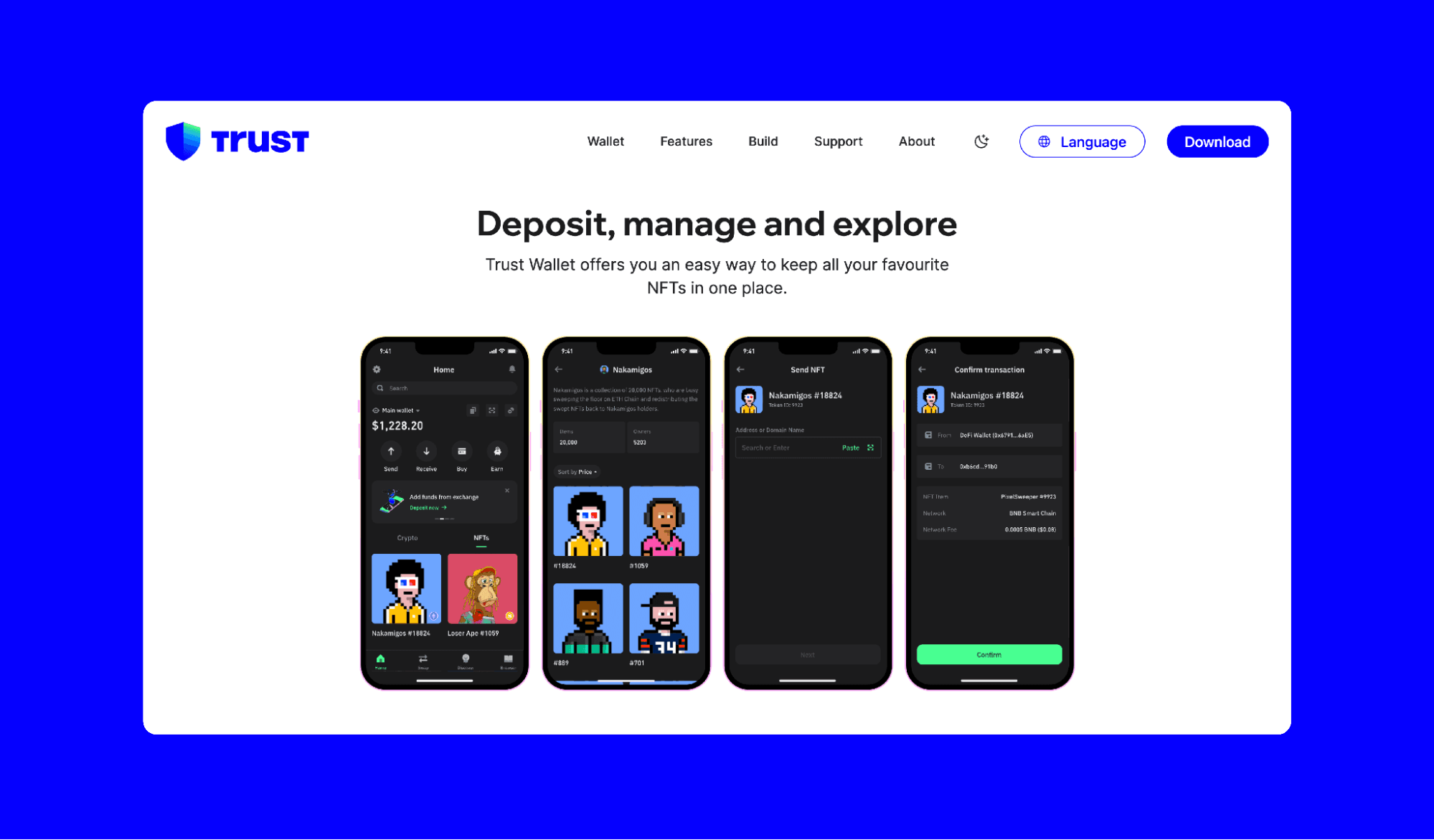
Trust Wallet supports 600M+ NFTs. You can use Trust Wallet as your secure crypto wallet and NFT wallet to store, showcase, and manage your NFTs across multiple blockchains. Download Trust Wallet as a mobile app, or install the Trust Wallet Extension for your desktop browser.
Explore Web3 with Trust Wallet
Frequently Asked Questions About Fungible and Non-Fungible Tokens
NFT and crypto prices are speculative and volatile. Past prices do not predict future value. The information below is educational only and not investment advice — do your own research before purchasing any digital asset.
What is the difference between a crypto coin and a token? A "coin" is the native currency of its own blockchain — Bitcoin (BTC) is the native coin of the Bitcoin blockchain, Ether (ETH) is the native coin of Ethereum. A "token" is an asset issued on top of an existing blockchain via a smart contract — for example, USDT, UNI, and LINK are all tokens issued on Ethereum. All coins are fungible by design, but tokens can be either fungible (ERC20) or non-fungible (ERC721).
What is the difference between ERC20 and ERC721? ERC20 is the technical standard for creating fungible tokens on Ethereum — tokens that are interchangeable and have equal value, like USDT, USDC, and LINK. ERC721 is the standard for non-fungible tokens — each token is unique with its own ID and metadata, like CryptoPunks and Bored Ape Yacht Club. ERC20 was introduced in 2015; ERC721 was introduced in 2018. A wallet that supports ERC20 also typically supports ERC721, because both are deployed as smart contracts on the same Ethereum blockchain.
Are stablecoins fungible tokens? Yes. Stablecoins like USDT (Tether), USDC (USD Coin), and DAI are fungible — each unit has identical value and can be exchanged one-to-one with another unit of the same stablecoin. Most are issued as ERC20 tokens on Ethereum (and bridged versions exist on other chains like Solana, BNB Chain, and Tron). Their "stable" property comes from the price peg to a reference asset like the US dollar, not from non-fungibility.
Can an NFT be divided into smaller parts? Not natively. A standard ERC721 NFT is indivisible by design — you own all of it or none of it. "Fractional NFTs" are a separate financial product where an NFT is wrapped in a vault smart contract that issues fungible ERC20 shares representing partial ownership of the underlying NFT. The original NFT itself remains a single, whole token; only the wrapper layer is divisible.
What is the ERC1155 standard? ERC1155 is a "multi-token standard" introduced by Enjin in 2018 that allows a single smart contract to manage both fungible and non-fungible tokens simultaneously. It is commonly used in blockchain gaming, where a contract might issue thousands of identical sword items (fungible) alongside unique legendary weapons (non-fungible). ERC1155 reduces gas costs compared to deploying separate ERC20 and ERC721 contracts.
Why are some NFTs worth millions of dollars? NFT value comes from three main factors: provenance (verifiable original-creator authorship and ownership history recorded on-chain), scarcity (limited supply with cryptographically verifiable rarity traits), and cultural significance (early collections established the medium and serve as historical artifacts). Like physical art, prices are speculative — an NFT that sold for millions in 2021 may be worth a fraction of that today. Past sale prices do not predict future value.
Can a fungible token be turned into a non-fungible token? Not directly — they are separate smart-contract standards (ERC20 and ERC721) with different functionality. However, you can "wrap" a fungible token in an NFT contract to create a unique on-chain certificate (used in some DeFi protocols), and you can use a hybrid standard like ERC1155 to combine both behaviors in a single contract. The underlying token types themselves don't change.
Are all cryptocurrencies fungible? Almost all are, by design. Bitcoin, Ethereum, BNB, Solana, and every major Layer-1 cryptocurrency are fungible — each unit is interchangeable with every other unit. The exceptions are NFT collections that are colloquially called "tokens" but technically are non-fungible (CryptoPunks, BAYC). Bitcoin has been the subject of academic discussion around "tainted" coins (units linked to criminal activity), but the protocol itself treats every BTC as identical to every other BTC.
What makes an NFT valuable? An NFT's value is determined by what buyers are willing to pay, which depends on: cultural relevance and community (the project's brand and holder base), utility (some NFTs grant access to exclusive content, events, or governance rights), scarcity (collection size and rarity of specific traits), creator reputation (the artist's or studio's history), and historical significance (early or "genesis" NFTs in a category). Like all collectibles, prices are subjective and can change quickly.
Disclaimer: Content is for informational purposes and not investment advice. Web3 and crypto come with risk. Please do your own research with respect to interacting with any Web3 applications or crypto assets. View our terms of service.
Join the Trust Wallet community on Telegram. Follow us on X (formerly Twitter), Instagram, Facebook, Reddit, Warpcast, and Tiktok
Note: Any cited numbers, figures, or illustrations are reported at the time of writing, and are subject to change.
 How to Buy NFTs Using Trust Wallet
 How to Mint NFTs: A Beginner’s Guide