


What Is an Altcoin?
An altcoin — short for "alternative coin" — is any cryptocurrency that is not Bitcoin. The term was coined in the early days of crypto when new projects launched as alternatives to Bitcoin, often aiming to improve on its speed, scalability, programmability, or energy efficiency.
Today, there are over 10,000 altcoins ranging from major platforms like Ethereum and Solana to niche tokens built for specific use cases like gaming, privacy, or decentralized storage. While Bitcoin dominates as a store of value, altcoins power the vast majority of innovation in DeFi, NFTs, smart contracts, and Web3.
Categories of Altcoins
Platform Coins
Native currencies of smart contract blockchains that support decentralized applications.
| Coin | Blockchain | Key Strength |
|---|---|---|
| **ETH** | Ethereum | Largest smart contract ecosystem, EVM standard |
| **SOL** | Solana | High throughput (~65,000 TPS theoretical), low fees |
| **BNB** | BNB Chain | Deep integration with Binance ecosystem |
| **ADA** | Cardano | Peer-reviewed academic development approach |
| **AVAX** | Avalanche | Sub-second finality, subnet architecture |
| **DOT** | Polkadot | Cross-chain interoperability via parachains |
| **NEAR** | NEAR Protocol | Sharding-based scalability, developer-friendly |
Stablecoins
Cryptocurrencies designed to maintain a stable value, typically pegged 1:1 to the US dollar.
| Stablecoin | Type | Backing |
|---|---|---|
| **USDT (Tether)** | Centralized, fiat-backed | Cash, Treasury bills, commercial paper |
| **USDC (USD Coin)** | Centralized, fiat-backed | Cash and short-term US Treasuries |
| **DAI** | Decentralized, crypto-collateralized | Over-collateralized crypto deposits |
| **FDUSD** | Centralized, fiat-backed | Cash and cash equivalents |
Utility Tokens
Tokens that provide access to a specific product or service within a blockchain ecosystem.
LINK (Chainlink) — Pays oracle node operators for providing off-chain data to smart contracts
FIL (Filecoin) — Used to pay for decentralized file storage
GRT (The Graph) — Pays for querying indexed blockchain data
UNI (Uniswap) — Governance token for the Uniswap decentralized exchange
Governance Tokens
Tokens that grant voting rights over a protocol's development and treasury decisions.
UNI — Vote on Uniswap protocol changes
AAVE — Vote on Aave lending protocol parameters
MKR — Vote on MakerDAO's DAI stablecoin policies
ARB — Governance for the Arbitrum Layer 2 network
Memecoins
Cryptocurrencies that originated from internet culture, memes, or community hype rather than a specific technical innovation.
DOGE (Dogecoin) — The original memecoin, created in 2013 as a joke based on the Shiba Inu meme
SHIB (Shiba Inu) — ERC-20 token with a large community and expanding ecosystem
PEPE — Memecoin based on the Pepe the Frog internet meme
BONK — Solana-based memecoin
Privacy Coins
Cryptocurrencies designed to provide enhanced transaction privacy.
XMR (Monero) — Ring signatures and stealth addresses hide sender, receiver, and amount
ZEC (Zcash) — Optional shielded transactions using zero-knowledge proofs
Altcoins vs Bitcoin
| Feature | Bitcoin | Altcoins |
|---|---|---|
| Purpose | Store of value, digital money | Varies widely (smart contracts, DeFi, gaming, privacy, payments) |
| Supply | Fixed at 21 million | Varies — some fixed, some inflationary, some deflationary |
| Consensus | Proof of Work | Varies (PoS, DPoS, PoH, DAG, etc.) |
| Smart contracts | Limited | Full support on most platforms |
| Speed | ~7 TPS | 100 to 65,000+ TPS depending on chain |
| Risk level | Lower (most established) | Higher (newer, less proven, more volatile) |
| Market dominance | ~50% of total crypto market cap | ~50% combined |
How to Evaluate an Altcoin
Before investing in or using an altcoin, consider these factors:
Use case — What problem does it solve? Is the blockchain or token actually needed for this?
Team and development — Who built it? Is the code open-source? Is development active?
Tokenomics — What is the total supply? How are tokens distributed? Is there inflation or burn mechanisms?
Market cap and liquidity — Can you buy and sell without significant price impact?
Community and adoption — Is the project actively used or is it purely speculative?
Security — Has the protocol been audited? Has it suffered exploits?
Regulatory status — Is the token classified as a security in any jurisdiction?
Risks of Altcoins
Higher volatility — Most altcoins are significantly more volatile than Bitcoin
Lower liquidity — Smaller altcoins may be difficult to sell quickly without price impact
Project failure — Many altcoin projects have been abandoned, lost funding, or failed to deliver
Scams and rug pulls — Low-cap tokens can be created by bad actors who drain liquidity after attracting buyers
Regulatory risk — Some altcoins may face regulatory action depending on their structure and classification
Altcoins and Trust Wallet
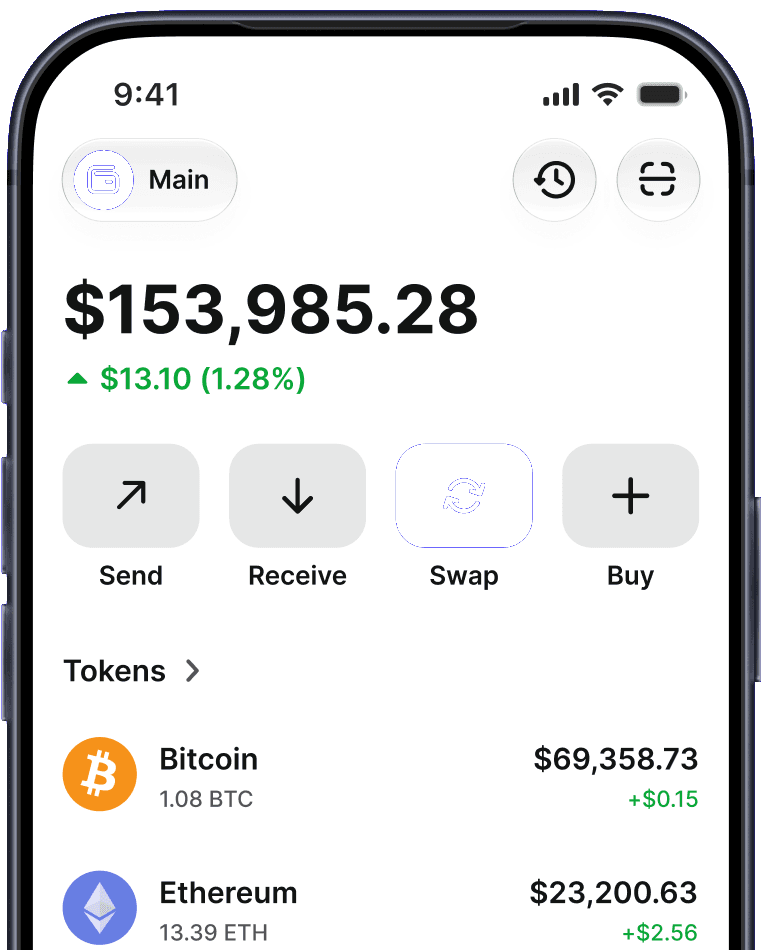
Trust Wallet supports 10,000+ altcoins across 100+ blockchains. You can buy, store, send, receive, swap, and stake altcoins directly from the app. Trust Wallet automatically detects tokens on supported chains, and you can add custom tokens manually. As a non-custodial wallet, you maintain full control of your private keys and your assets at all times.