

What Is a Blockchain?
A blockchain is a decentralized digital ledger that records transactions across a peer-to-peer network of computers. Each transaction is grouped into a block, and each block is cryptographically linked to the previous one, forming an unbreakable chain. This structure makes blockchain data transparent, tamper-resistant, and verifiable by anyone on the network without relying on a central authority.
Blockchain was first introduced in 2008 as the underlying technology behind Bitcoin, described in Satoshi Nakamoto's whitepaper. Since then, it has expanded far beyond cryptocurrency into finance, supply chain, healthcare, gaming, and governance.
How Does Blockchain Work?
Blockchain operates through a sequence of steps that repeat every time a new transaction occurs:
A user initiates a transaction (for example, sending Bitcoin to another wallet).
The transaction is broadcast to a network of nodes (computers running the blockchain software).
Nodes validate the transaction using a consensus mechanism such as Proof of Work or Proof of Stake.
Once validated, the transaction is grouped with others into a new block.
The new block is cryptographically hashed and linked to the previous block.
The block is added to the chain permanently, and every node updates its copy of the ledger.
Because every node holds a copy of the full ledger, there is no single point of failure. Altering any past block would require changing every subsequent block across a majority of nodes simultaneously, which is computationally impractical.
Key Properties of Blockchain
Decentralization
No single entity controls the network. Decision-making and validation are distributed across thousands of independent nodes worldwide.
Immutability
Once a block is confirmed and added to the chain, the data it contains cannot be altered or deleted. This creates a permanent, auditable record of every transaction.
Transparency
On public blockchains like Bitcoin and Ethereum, anyone can view all transactions. This open access enables trustless verification — you do not need to trust a third party to confirm a transaction happened.
Security
Blockchain uses cryptographic hashing (typically SHA-256) to secure data. Each block contains the hash of the previous block, making it extremely difficult to tamper with any record without detection.
Types of Blockchain
| Type | Access | Examples | Use Case |
|---|---|---|---|
| **Public** | Open to anyone | Bitcoin, Ethereum, BNB Chain | Cryptocurrency, DeFi, NFTs |
| **Private** | Restricted to authorized participants | Hyperledger Fabric | Enterprise supply chain |
| **Consortium** | Controlled by a group of organizations | R3 Corda | Banking, trade finance |
| **Hybrid** | Combines public and private elements | XinFin | Government, healthcare |
Blockchain vs Traditional Databases
| Feature | Blockchain | Traditional Database |
|---|---|---|
| Control | Decentralized | Centralized |
| Data modification | Immutable once confirmed | Can be edited or deleted |
| Transparency | Public or permissioned | Typically private |
| Trust model | Trustless (cryptographic) | Trust the administrator |
| Speed | Slower (consensus required) | Faster (single authority) |
Why Does Blockchain Matter?
Blockchain solves the fundamental problem of digital trust. Before blockchain, transferring value online required intermediaries like banks, payment processors, or governments to verify transactions. Blockchain removes that requirement by replacing institutional trust with mathematical proof.
This has enabled:
Cryptocurrencies — Peer-to-peer digital money without banks (Bitcoin, Ethereum)
Decentralized Finance (DeFi) — Lending, borrowing, and trading without intermediaries
NFTs — Verifiable ownership of unique digital assets
Smart Contracts — Self-executing agreements that run automatically when conditions are met
Decentralized Identity — Users control their own data instead of relying on centralized platforms
Blockchain and Trust Wallet
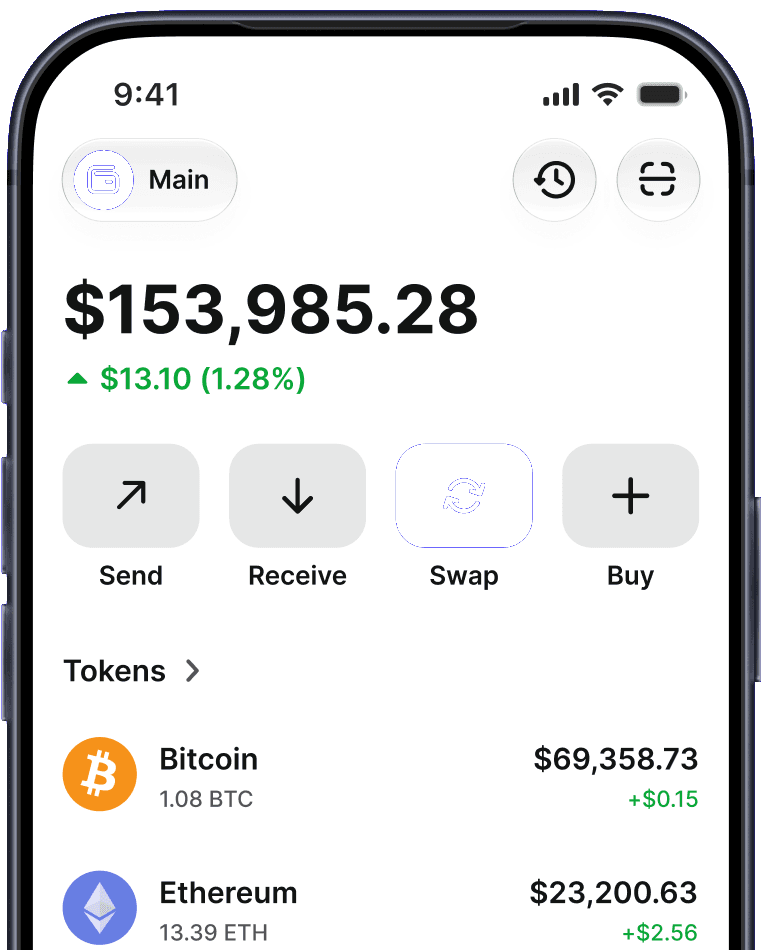
Trust Wallet is a non-custodial crypto wallet that connects you directly to multiple blockchains including Ethereum, BNB Chain, Solana, Bitcoin, and 100+ others. When you use Trust Wallet to send, receive, stake, or swap tokens, your transactions are recorded on the blockchain — giving you full ownership and transparency over your assets without relying on any intermediary.