


What Is Cryptocurrency?
Cryptocurrency is a form of digital currency that uses cryptography to secure transactions, control the creation of new units, and verify the transfer of assets. Unlike traditional money issued by governments (fiat currency), cryptocurrency operates on decentralized blockchain networks — meaning no bank, government, or single entity controls it.
Bitcoin, created in 2009 by the pseudonymous Satoshi Nakamoto, was the first cryptocurrency. Today, there are over 10,000 cryptocurrencies including Ethereum (ETH), BNB (BNB), Solana (SOL), XRP, and thousands of tokens built on various blockchains.
How Does Cryptocurrency Work?
Cryptocurrency transactions follow a decentralized process:
A user creates a transaction (for example, sending ETH from one wallet to another).
The transaction is signed with the sender's private key, which proves ownership without revealing the key itself.
The signed transaction is broadcast to the blockchain network.
Validator nodes verify the transaction using the network's consensus mechanism (Proof of Work, Proof of Stake, etc.).
Once validated, the transaction is added to a new block on the blockchain.
The recipient's wallet balance updates, and the transaction becomes part of the permanent ledger.
No bank or payment processor is involved. The entire process is peer-to-peer, secured by mathematics rather than institutional trust.
Types of Cryptocurrency
Coins
Coins are native currencies of their own blockchain. They are used to pay transaction fees and reward validators.
Bitcoin (BTC) — The first and largest cryptocurrency by market cap. Designed as digital money.
Ethereum (ETH) — Powers the Ethereum network, used for gas fees and staking.
Solana (SOL) — Native coin of the Solana blockchain, known for high speed and low fees.
BNB — Native coin of BNB Chain, used for transaction fees, staking, and DeFi.
Tokens
Tokens are built on top of existing blockchains using smart contracts. They do not have their own blockchain.
ERC-20 tokens — Built on Ethereum (e.g., USDT, LINK, UNI)
BEP-20 tokens — Built on BNB Chain (e.g., CAKE, BAKE)
SPL tokens — Built on Solana (e.g., RAY, SRM)
Stablecoins
Stablecoins are cryptocurrencies pegged to a stable asset like the US dollar. They are designed to minimize price volatility.
USDT (Tether) — Pegged 1:1 to USD
USDC (USD Coin) — Pegged 1:1 to USD, fully reserved
DAI — Decentralized stablecoin maintained by smart contracts
Cryptocurrency vs Traditional Currency
| Feature | Cryptocurrency | Traditional Currency (Fiat) |
|---|---|---|
| Issuer | No central issuer (decentralized) | Central bank (government) |
| Transaction verification | Blockchain consensus | Banks and payment networks |
| Supply control | Algorithmic (e.g., Bitcoin capped at 21M) | Central bank monetary policy |
| Transfer speed | Minutes (global, 24/7) | Hours to days (business hours, cross-border delays) |
| Transparency | Public ledger | Private banking records |
| Reversibility | Irreversible once confirmed | Can be reversed (chargebacks) |
| Access | Anyone with internet and a wallet | Requires bank account or ID |
How to Store Cryptocurrency
Cryptocurrency is stored in digital wallets. The wallet does not actually hold the coins — it holds the private keys that give you access to your assets on the blockchain.
Types of Wallets
| Wallet Type | Description | Example |
|---|---|---|
| **Non-custodial** | You control your private keys. No third party can access your funds. | Trust Wallet |
| **Custodial** | A third party (exchange) holds your keys on your behalf. | Centralized exchanges |
| **Hardware** | Physical device that stores keys offline for maximum security. | Ledger, Trezor |
Common Ways to Use Cryptocurrency
Sending and receiving payments — Transfer value globally without intermediaries
Trading — Buy and sell on exchanges or through decentralized swap protocols
Staking — Lock coins to help secure a blockchain network and earn rewards
DeFi — Lend, borrow, and provide liquidity to earn yield
NFTs — Buy, sell, and trade unique digital assets
Paying for goods and services — Accepted by a growing number of merchants worldwide
Risks of Cryptocurrency
Price volatility — Crypto prices can change dramatically in short periods
Irreversible transactions — Sending to the wrong address cannot be undone
Private key responsibility — Losing your seed phrase means losing access to your funds permanently
Regulatory uncertainty — Crypto regulations vary by country and are still evolving
Scams and phishing — Bad actors target crypto users through fake websites, tokens, and social engineering
Cryptocurrency and Trust Wallet
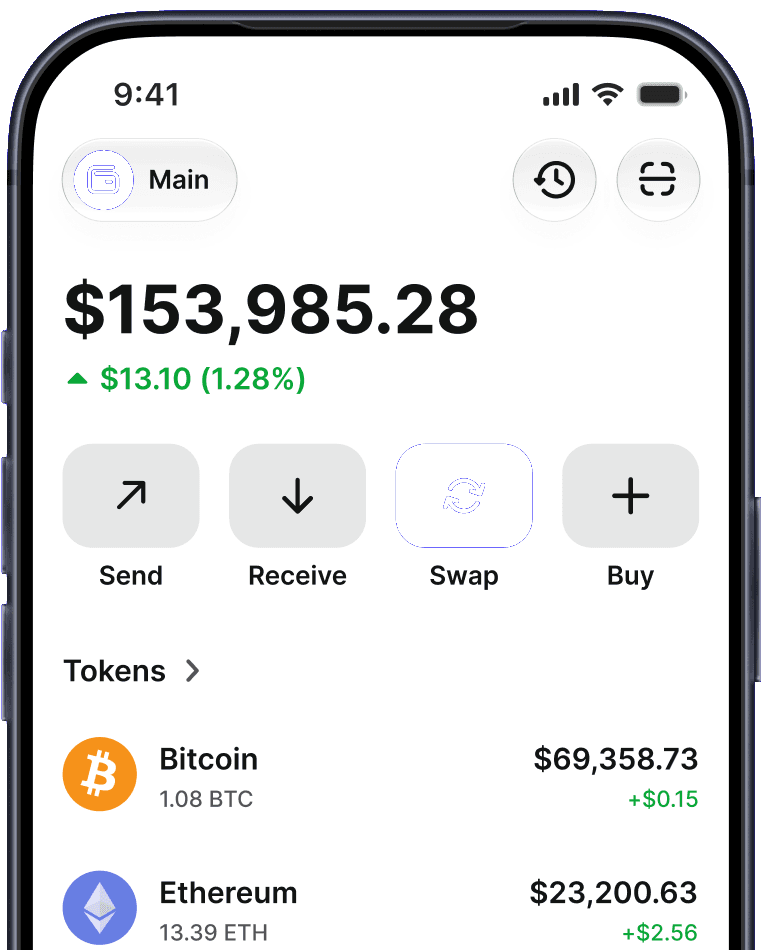
Trust Wallet is a non-custodial crypto wallet that supports 10,000+ cryptocurrencies across 100+ blockchains. You can buy, store, send, receive, swap, and stake crypto directly from the app — all while keeping full control of your private keys. Your crypto, your keys, your wallet.