


What Is Crypto Mining?
Crypto mining is the process by which new transactions are verified and added to a Proof-of-Work (PoW) blockchain, and new coins are introduced into circulation. Miners use specialized hardware to compete to solve a computationally difficult puzzle; the winner adds the next block and receives a reward.
Mining serves two essential roles: it secures the network against fraud and double-spending, and it distributes new coins in a decentralized way without any central issuer.
How Does Mining Work?
Pending transactions are gathered from the network's mempool into a candidate block.
Miners repeatedly hash the block's data with different values (a nonce) to try to find a hash below the network's target.
The puzzle is hard to solve but easy for others to verify — this is the essence of Proof of Work.
The first miner to find a valid hash broadcasts the block to the network.
Other nodes verify the solution and add the block to their copy of the blockchain.
The winning miner receives the block reward (newly minted coins) plus the transaction fees in that block.
What Do Miners Need?
| Resource | Role in Mining |
|---|---|
| Mining hardware (ASIC/GPU) | Performs the hashing computations |
| Electricity | Powers the hardware; a major operating cost |
| Internet connection | Receives transactions and broadcasts blocks |
| Mining software | Connects hardware to the network/pool |
| (Optional) Mining pool | Combines many miners' power to share rewards |
Mining Difficulty
To keep block times stable as more computing power joins the network, PoW blockchains automatically adjust mining difficulty. If blocks are being found too quickly, difficulty rises; if too slowly, it falls. Bitcoin retargets difficulty roughly every two weeks to maintain its ~10-minute block time.
Mining vs Staking
| Feature | Mining (Proof of Work) | Staking (Proof of Stake) |
|---|---|---|
| Secures network via | Computing power | Staked collateral |
| Hardware needed | Specialized (ASIC/GPU) | Standard computer |
| Energy use | High | Low |
| Reward for | Solving the puzzle first | Being selected to validate |
| Example | Bitcoin | Ethereum, Solana |
Mining and Trust Wallet
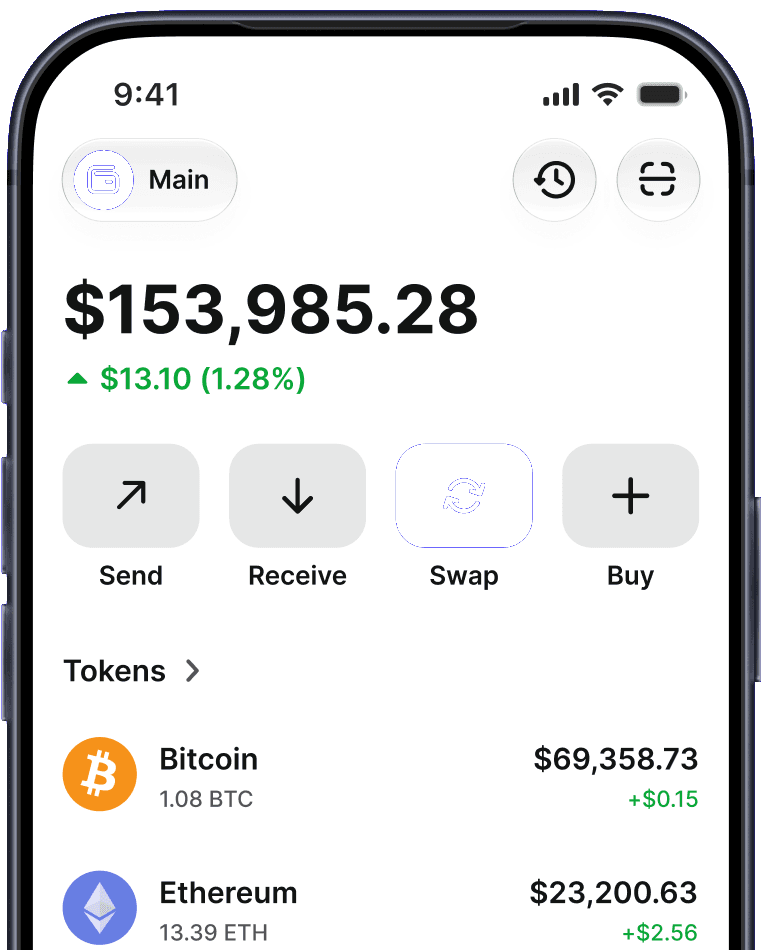
While Trust Wallet does not mine coins for you, it's where mined or earned rewards can be securely stored. As a non-custodial wallet, you keep full control of your private keys, can receive Bitcoin and other mineable coins to your address, and manage your holdings across 100+ blockchains — all in one place.