


What Is a Public Key?
A public key is a cryptographic identifier derived from your private key that acts as your blockchain address. You can freely share your public key with anyone — it is how others send cryptocurrency to you. Unlike a private key, a public key cannot be used to access or move funds.
How Does a Public Key Work?
Public keys are generated from private keys using a one-way mathematical function called elliptic curve cryptography (ECC). The process is irreversible: a public key can always be derived from a private
key, but a private key can never be recovered from a public key.
Your wallet generates a private key (a random 256-bit number).
A public key is derived from the private key using ECC.
Your wallet address is then derived from the public key (via a hashing function).
When you share your wallet address, others can send you crypto. When you send crypto, your private key signs the transaction, and the network verifies it against your public key.
Private Key vs Public Key vs Wallet Address
| Private Key | Public Key | Wallet Address | |
|---|---|---|---|
| What it is | Secret master key | Shareable identifier | Shortened version of public key |
| Can you share it? | Never | Yes | Yes |
| Used to | Sign and authorize transactions | Verify transaction signatures | Receive crypto |
| Derived from | Random generation | Private key | Public key |
| Format | 64-character hex string | 128-character hex string | Shorter string (varies by chain) |
Why You Never Share Your Private Key (But Can Share Your Public Key)
The security of crypto wallets depends entirely on this asymmetry. Your public key is mathematically linked to your private key, but sharing your public key reveals nothing about your private key. Think of it like a padlock: anyone can lock it (send you crypto using your public key/address), but only you hold the key to open it (your private key).
Public Keys and Trust Wallet
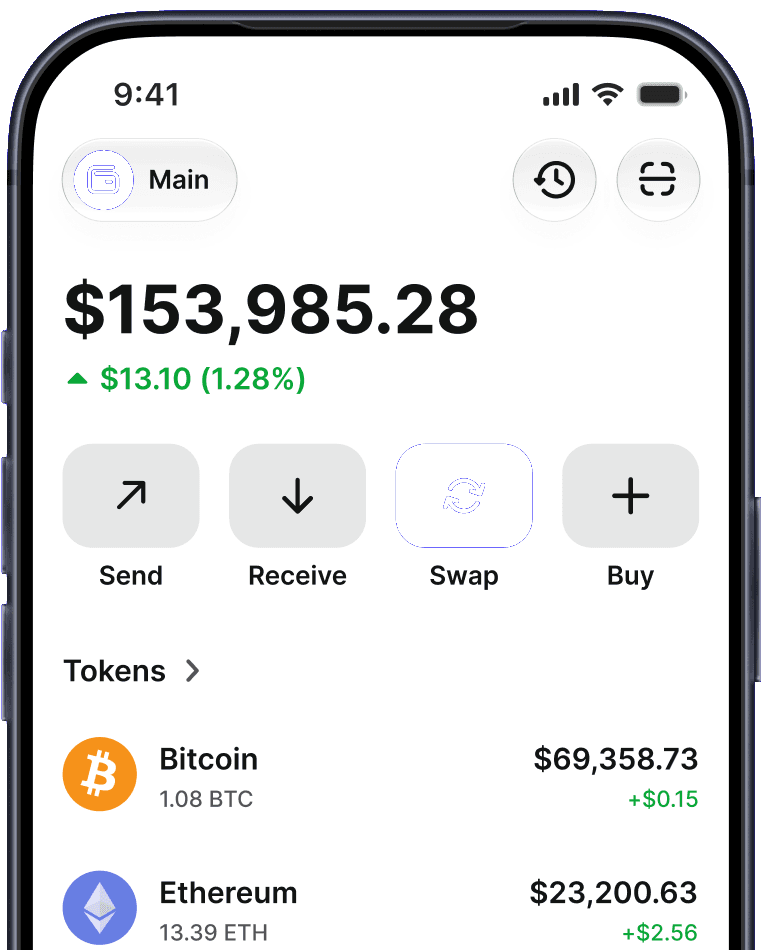
When you create a wallet in Trust Wallet, your public key and wallet address are automatically generated from your private key. Trust Wallet displays your wallet address (the public-facing version of your
public key) in the app so you can share it to receive crypto. Your private key and seed phrase remain encrypted on your device and are never shared with Trust Wallet.
Crypto Wallet
Title: Crypto Wallet | Slug: crypto-wallet
Description: A crypto wallet is software or hardware that stores your private keys and lets you send, receive, and manage digital assets on any blockchain.
What Is a Crypto Wallet?
A crypto wallet is a tool — software or hardware — that stores the private keys needed to access and manage cryptocurrency on a blockchain. Despite the name, a crypto wallet does not actually store your
coins. Your assets live on the blockchain. The wallet stores the keys that prove ownership and authorize transactions.
How Does a Crypto Wallet Work?
The wallet generates a private key and a corresponding public key (wallet address).
You share your wallet address to receive crypto.
When you send crypto, the wallet uses your private key to create a digital signature that authorizes the transaction.
The blockchain network verifies the signature and processes the transfer.
Your crypto is always on the blockchain. The wallet is the interface that lets you control it.
Types of Crypto Wallets
| Type | How it works | Connected to internet? | Best for |
|---|---|---|---|
| Hot wallet (mobile/desktop app) | Software on your phone or computer | Yes | Daily use, small amounts |
| Browser extension wallet | Software in your browser | Yes | DeFi, dApps, NFTs |
| Hardware wallet | Physical device storing keys offline | No (air-gapped) | Long-term, large holdings |
| Paper wallet | Private key printed or written on paper | No | Cold storage (advanced users) |
| Custodial wallet | Exchange holds your keys for you | Yes | Beginners (but you don't own the keys) |
Custodial vs Non-Custodial Wallets
The most important distinction in crypto wallets is who holds the private keys.
Custodial wallets (e.g. exchange accounts) — the platform holds your keys. If the platform is hacked or goes bankrupt, your funds are at risk.
Non-custodial wallets (e.g. Trust Wallet) — only you hold your private keys. No company can freeze, seize, or lose your funds.
The phrase "not your keys, not your coins" refers to this distinction.
What to Look for in a Crypto Wallet
Non-custodial — you control your private keys
Multi-chain support — supports the blockchains and tokens you use
Open-source — code is publicly auditable
Active development — regular security updates
Good UX — easy to use without sacrificing security
Crypto Wallets and Trust Wallet
Trust Wallet is a free, non-custodial crypto wallet available on iOS, Android, and as a Chrome browser extension. It supports 100+ blockchains and 10 million+ digital assets. Your private keys are generated on your device and never leave it. Trust Wallet gives you full control of your crypto alongside access to DeFi, dApps, NFTs, staking, and token swaps.