


What Is Self-Custody Trading?
Self-custody trading is the practice of executing trades — spot swaps, perpetual futures, or any other on-chain transaction — directly from a wallet in which the user holds their
own private keys. There is no exchange or custodian holding the funds on the user's behalf. The user signs each transaction with their key, and assets move directly between the user's
wallet and the on-chain protocol.
Self-custody trading is a foundational concept in decentralized finance (DeFi). It stands in direct contrast to centralized exchange trading, where users deposit funds into an
exchange-controlled account and trust the exchange to custody and execute on their behalf.
How Does Self-Custody Trading Work?
The user holds a self-custody wallet (software or hardware) whose private keys only they can access.
They connect the wallet to a decentralized trading protocol — such as a DEX aggregator, a perpetuals exchange, or an AMM.
The user approves a transaction (sign with their private key) and it is broadcast to the blockchain.
The protocol executes the trade on-chain, transferring assets directly to and from the user's wallet.
The user can withdraw or disconnect at any time without asking permission.
Self-Custody Trading vs Centralized Exchange Trading
| Feature | Self-Custody Trading | Centralized Exchange |
|---|---|---|
| Custody of funds | User holds keys | Exchange holds funds |
| Counterparty risk | Protocol smart contract | Exchange solvency |
| Account sign-up | Not required | Required |
| KYC | Not required at protocol level | Typically required |
| Withdrawal | Instant and permissionless | Subject to exchange approval |
| Transparency | Fully on-chain | Exchange-controlled |
| Censorship resistance | Protocol-level | Exchange can freeze accounts |
Benefits of Self-Custody Trading
Elimination of Exchange Insolvency Risk
Because funds never leave the user's wallet, they cannot be lost due to exchange bankruptcy (e.g., FTX, Mt. Gox, Celsius).
No Account Creation
Self-custody trading does not require sign-up, email verification, or identity checks at the protocol level.
Full Transparency
Every transaction is recorded on a public blockchain and can be independently verified.
Global, Permissionless Access
Anyone with an internet connection and a self-custody wallet can interact with on-chain trading protocols, subject to platform-specific geographic restrictions.
Control of Private Keys
Only the user can authorize transactions — no third party can freeze, reverse, or block their funds.
Risks of Self-Custody Trading
Private key responsibility — if the user loses their seed phrase or private key, funds are irrecoverable
Smart contract risk — bugs or exploits in the protocol can result in losses
Oracle risk (for derivatives) — faulty price feeds can trigger unfair liquidations
User error — approving malicious contracts, signing phishing transactions, or misconfiguring slippage
Products Commonly Traded in Self-Custody
Spot swaps (token ↔ token, e.g., via DEX aggregators)
Perpetual futures (via Hyperliquid, Aster DEX)
Options (via on-chain options protocols)
Yield-bearing deposits (via lending markets)
Self-Custody Trading and Trust Wallet
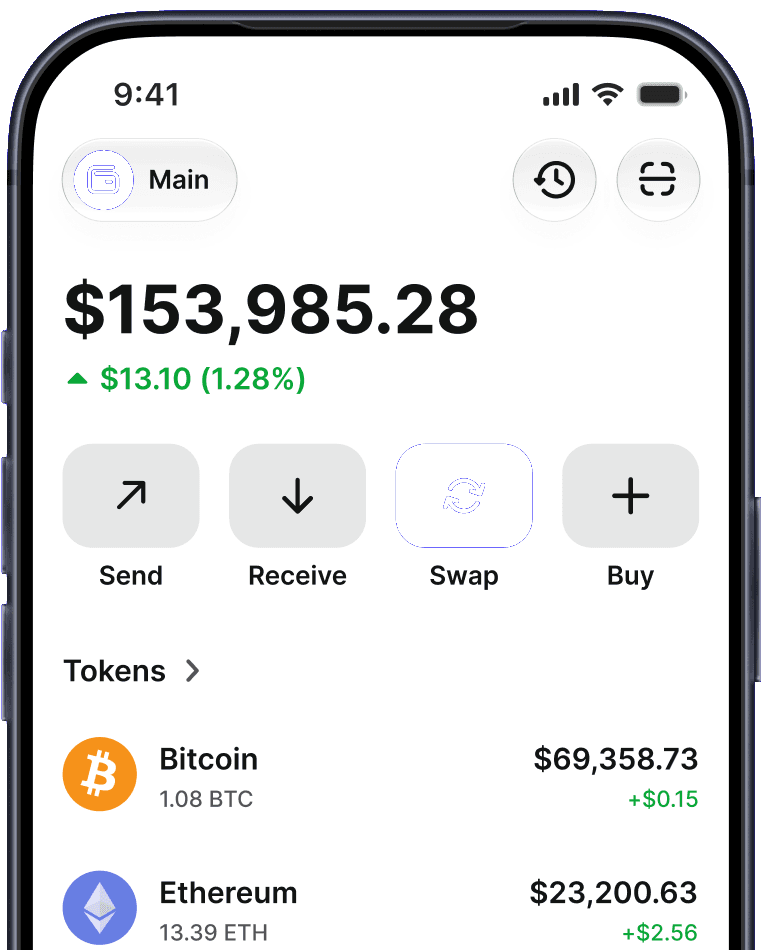
Trust Wallet is a non-custodial wallet designed for self-custody trading across 100+ blockchains. Users can swap tokens, trade perpetual futures on Hyperliquid and Aster DEX, stake
assets, and interact with any on-chain protocol — all without ever transferring custody of their funds. Only the user holds the keys to their wallet.