


What Is Slippage?
Slippage is the gap between the price you expect to get on a trade and the price you actually receive when it executes. In fast-moving or low-liquidity markets, the price can shift in the moments between placing your order and it being filled — resulting in a slightly better or (more often) worse outcome.
Slippage is especially common on decentralized exchanges (DEXs), where trades execute against a liquidity pool whose price changes with each transaction.
Why Does Slippage Happen?
You submit a swap expecting a certain price (for example, 1 ETH for 3,000 USDC).
Between submission and execution, other trades or price movements change the pool's ratio.
Your trade fills at a slightly different price than quoted.
The larger your trade relative to the pool, the more it moves the price — increasing slippage.
Main Causes of Slippage
| Cause | Effect |
|---|---|
| Low liquidity | Even small trades move the price significantly |
| Large order size | Big trades consume more of the pool, worsening price |
| High volatility | Rapid price changes between order and execution |
| Network congestion | Delays give the price more time to move |
What Is Slippage Tolerance?
Most DEXs let you set a slippage tolerance — the maximum price change you're willing to accept. If the price moves beyond that limit, the transaction automatically fails to protect you.
Too low — your trade may fail repeatedly in volatile conditions.
Too high — you risk a much worse price, and become vulnerable to MEV/sandwich attacks.
A common range is 0.1%–1% for liquid pairs, with higher settings only for illiquid tokens.
How to Minimize Slippage
Trade highly liquid token pairs whenever possible.
Break very large trades into smaller ones.
Set a sensible slippage tolerance rather than a very high one.
Avoid trading during periods of extreme volatility or congestion.
Slippage and Trust Wallet
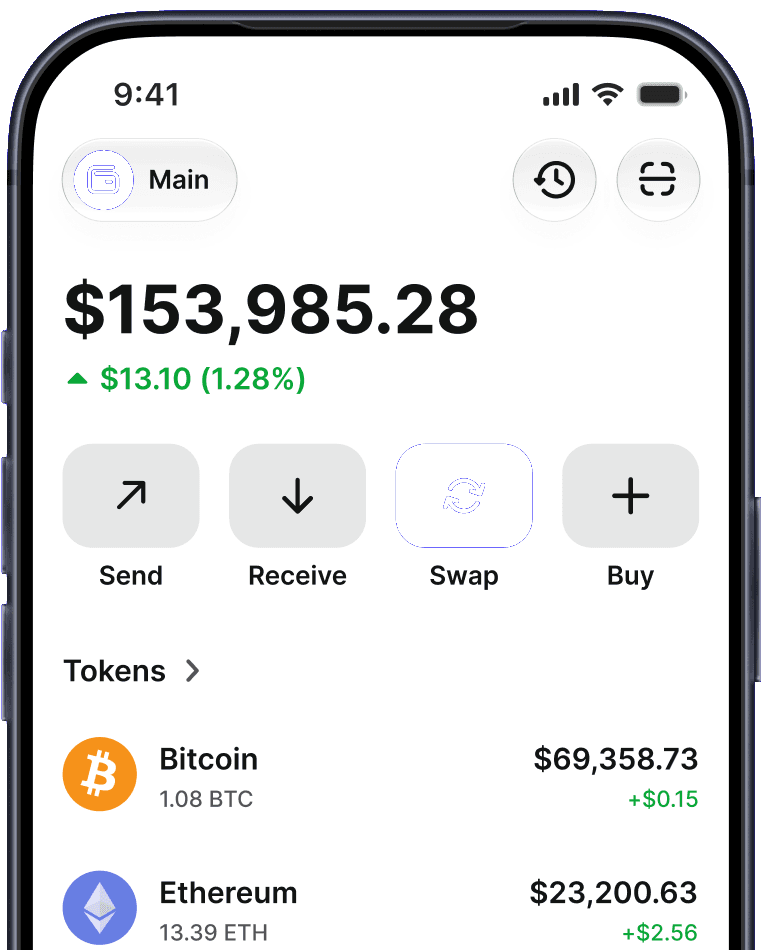
When you swap tokens in Trust Wallet, you can review the expected rate and adjust your slippage tolerance before confirming — giving you control over how much price movement you'll accept. As a non-custodial wallet supporting swaps across 100+ blockchains, Trust Wallet helps you trade with transparency while you keep full control of your funds.