

What Is a Token?
A token is a digital asset issued on top of an existing blockchain rather than running on its own dedicated network. Tokens are created using smart contracts and can represent almost anything of value: a currency, a share of governance power, ownership of a real-world asset, a collectible, or access to a service.
For example, USDT, UNI, and SHIB are all tokens issued on blockchains like Ethereum and BNB Chain, while the underlying ETH and BNB are coins native to those chains.
Token vs Coin: What's the Difference?
| Feature | Coin | Token |
|---|---|---|
| Runs on | Its own blockchain | An existing blockchain |
| Examples | BTC, ETH, BNB, SOL | USDT, UNI, LINK, SHIB |
| Created by | The blockchain's protocol | A smart contract |
| Primary use | Native currency, gas fees | Utility, governance, assets |
| Requires gas in | Itself | The host chain's coin |
How Do Tokens Work?
Tokens are governed by smart contracts that follow shared standards so wallets and apps can interact with them predictably:
A developer deploys a smart contract that defines the token's name, symbol, supply, and rules.
The contract tracks balances and handles transfers between addresses.
Wallets read the contract to display balances and let users send or receive the token.
Sending a token still requires paying gas fees in the host blockchain's native coin (e.g. ETH on Ethereum).
Common Token Standards
| Standard | Blockchain | Type |
|---|---|---|
| ERC-20 | Ethereum | Fungible tokens |
| ERC-721 | Ethereum | NFTs (non-fungible) |
| ERC-1155 | Ethereum | Multi-token (fungible + NFT) |
| BEP-20 | BNB Chain | Fungible tokens |
| SPL | Solana | Fungible + non-fungible |
Types of Tokens by Purpose
Utility tokens — provide access to a product or service within a network.
Governance tokens — grant voting rights over a protocol's decisions.
Stablecoins — tokens pegged to a stable asset like the US dollar (e.g. USDT, USDC).
Security tokens — represent ownership in a real-world asset or investment.
Non-fungible tokens (NFTs) — unique tokens representing one-of-a-kind items.
Tokens and Trust Wallet
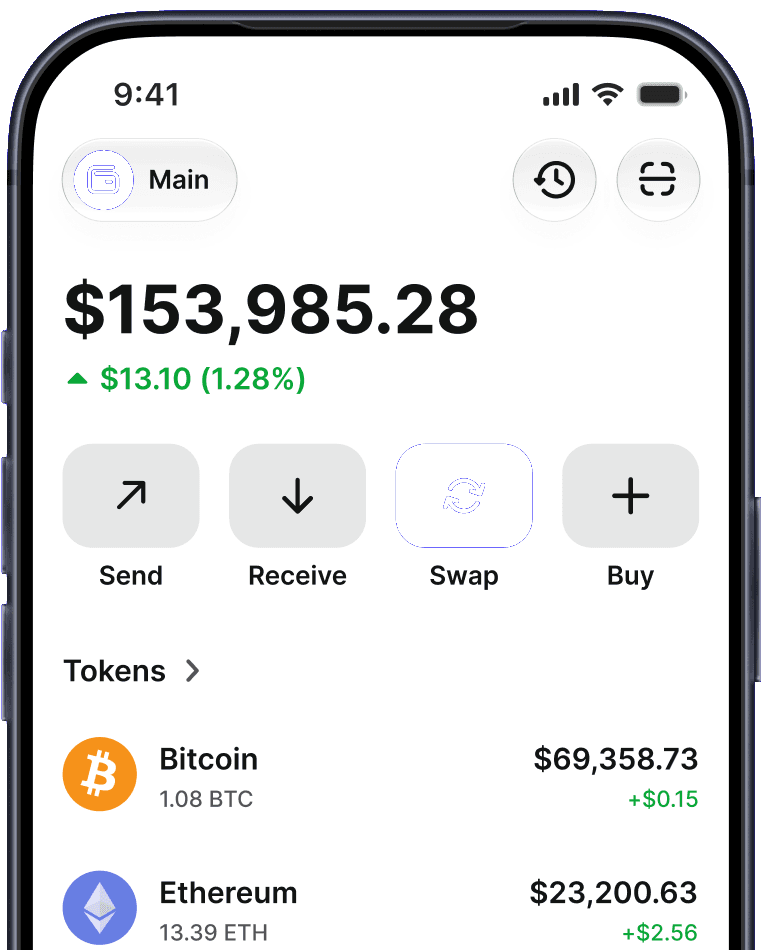
Trust Wallet supports millions of tokens across 100+ blockchains, including ERC-20, BEP-20, SPL and many other standards. As a non-custodial wallet, only you control your tokens via your private keys. You can add custom tokens by contract address, swap tokens directly in-app, and view all your fungible tokens and NFTs in one place — while always keeping the gas coin (like ETH or BNB) needed to move them.