

What Is Web3?
Web3 is the next evolution of the internet built on blockchain technology. It describes a decentralized online ecosystem where users own their data, digital assets, and identities — without relying on centralized platforms like Google, Meta, or traditional banks.
The term was coined by Ethereum co-founder Gavin Wood in 2014 as a vision for a more open, trustless, and permissionless internet.
The Evolution of the Web
| Era | Description | Control |
|---|---|---|
| Web1 (1990s–2000s) | Read-only static websites | Decentralized but limited |
| Web2 (2000s–present) | Interactive social platforms, apps | Centralized corporations |
| Web3 (emerging) | Blockchain-based, user-owned internet | Decentralized, user-controlled |
Core Principles of Web3
Decentralization
No single company controls the network. Applications run on distributed blockchain infrastructure maintained by independent nodes.
User Ownership
Users own their digital assets — tokens, NFTs, in-game items — as entries on a public blockchain, not as data in a company's database.
Trustless Interactions
Smart contracts automatically execute agreements based on code, removing the need to trust a third party.
Permissionless Access
Anyone with an internet connection and a crypto wallet can access Web3 applications — no sign-ups, ID verification, or geographic restrictions.
Key Components of Web3
Blockchain networks — Ethereum, Solana, BNB Chain, and others provide the infrastructure
Smart contracts — Self-executing code that powers decentralized applications
Crypto wallets — Your gateway to Web3, replacing usernames and passwords
DeFi — Financial services without banks or brokers
NFTs — Verifiable digital ownership
DAOs — Community-governed organizations run by token holders
Web3 and Trust Wallet
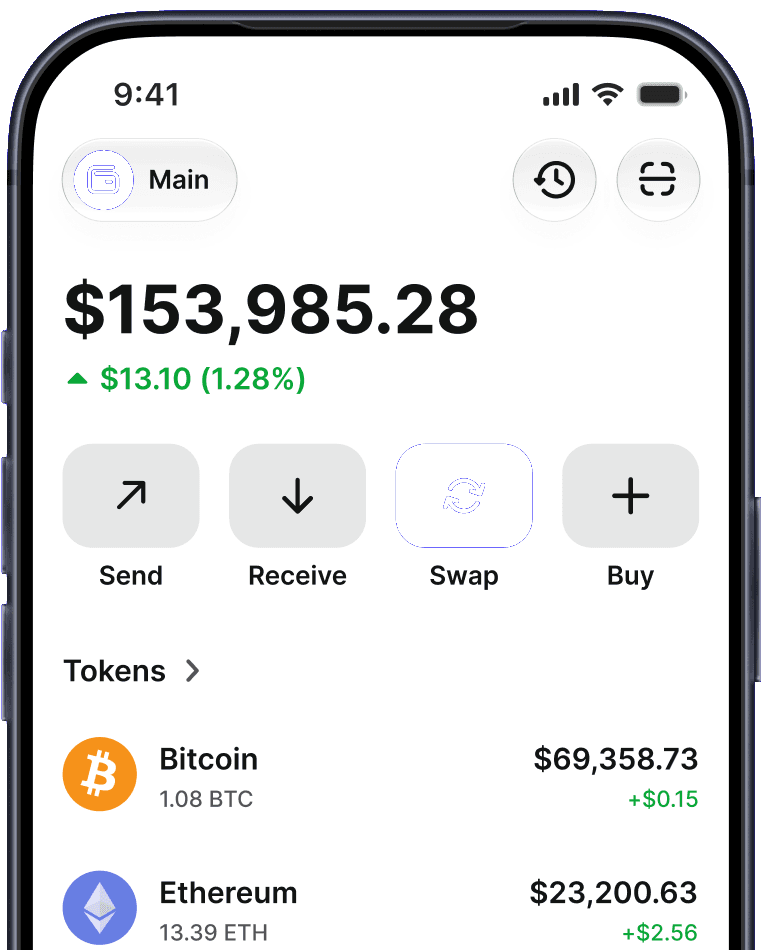
Trust Wallet is your gateway to Web3. With the built-in DApp browser, you can connect your wallet to thousands of decentralized applications across multiple blockchains — from DeFi protocols and NFT marketplaces to blockchain games and DAOs — all without handing control of your assets to a third party.