

Key Takeaways:
Your private keys and seed phrases should never be shared with anyone, including anyone who claims to be, or is, a customer support representative.
Dividing your crypto across multiple wallets can reduce your exposure to potential security breaches.
Hardware wallets paired with browser extensions provide strong protection for long-term holdings.
Your crypto wallet security determines whether you keep your digital assets or lose them to hackers and scammers. Cryptocurrency provides incredible opportunities, but it also attracts bad actors who constantly develop new ways to access your funds. This article walks you through five proven practices that will help you protect your crypto holdings, from understanding private key management to implementing hardware wallet solutions.
1. Never Disclose Your Private Keys or Seed Phrases
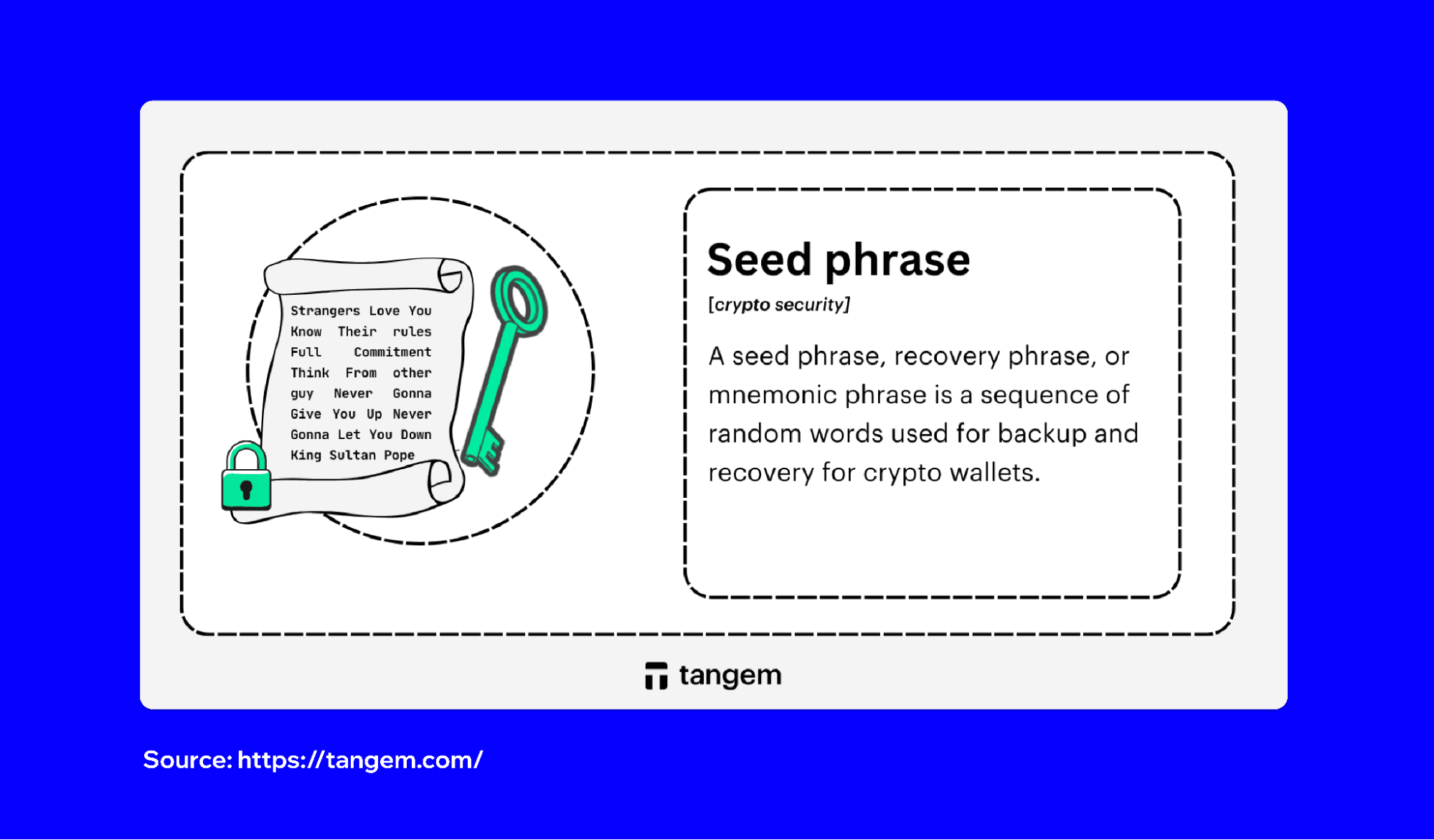
Your private keys and seed phrases are the only thing standing between your crypto and potential thieves. Your credentials enable complete control over your wallet. Anyone who obtains them can drain your funds instantly.
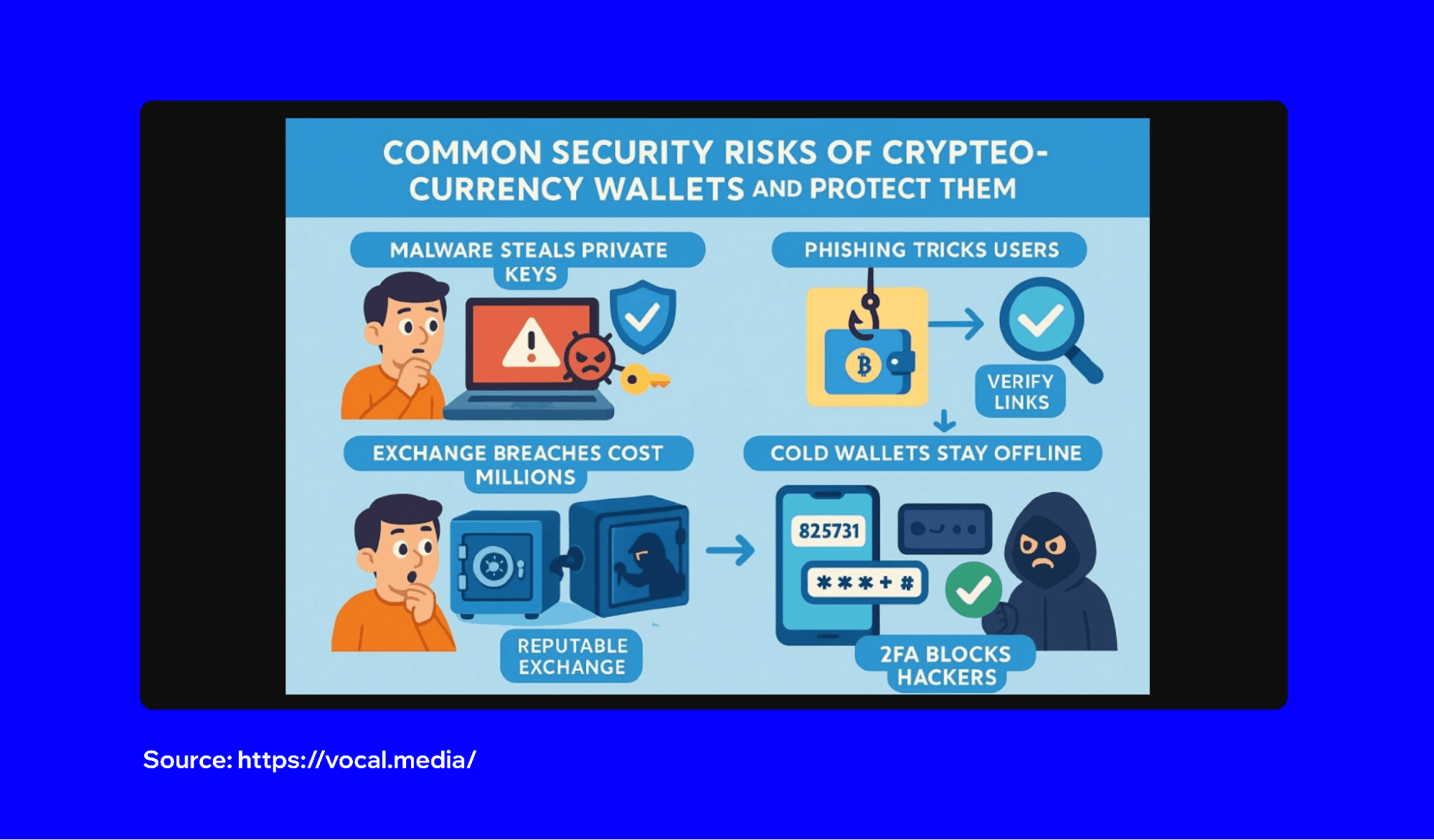
Scammers frequently impersonate customer support representatives and ask for your seed phrase under the guise of "verifying your account" or "solving a technical issue". Legitimate wallet providers and exchanges will never ask for this information. Avoid storing your seed phrase digitally, whether in cloud storage, email drafts, or photo galleries on your phone. Write it down on paper and store it in a secure physical location that only you can access.
Phishing websites are another major threat to your private keys. Fraudulent sites mimic legitimate crypto platforms and trick you into entering your credentials. Always verify that you're on the correct website by checking the URL carefully for spelling errors and ensuring it uses HTTPS. Bookmark official sites and use those bookmarks instead of clicking links from emails or social media messages.
2. Store Your Assets in Multiple Wallets
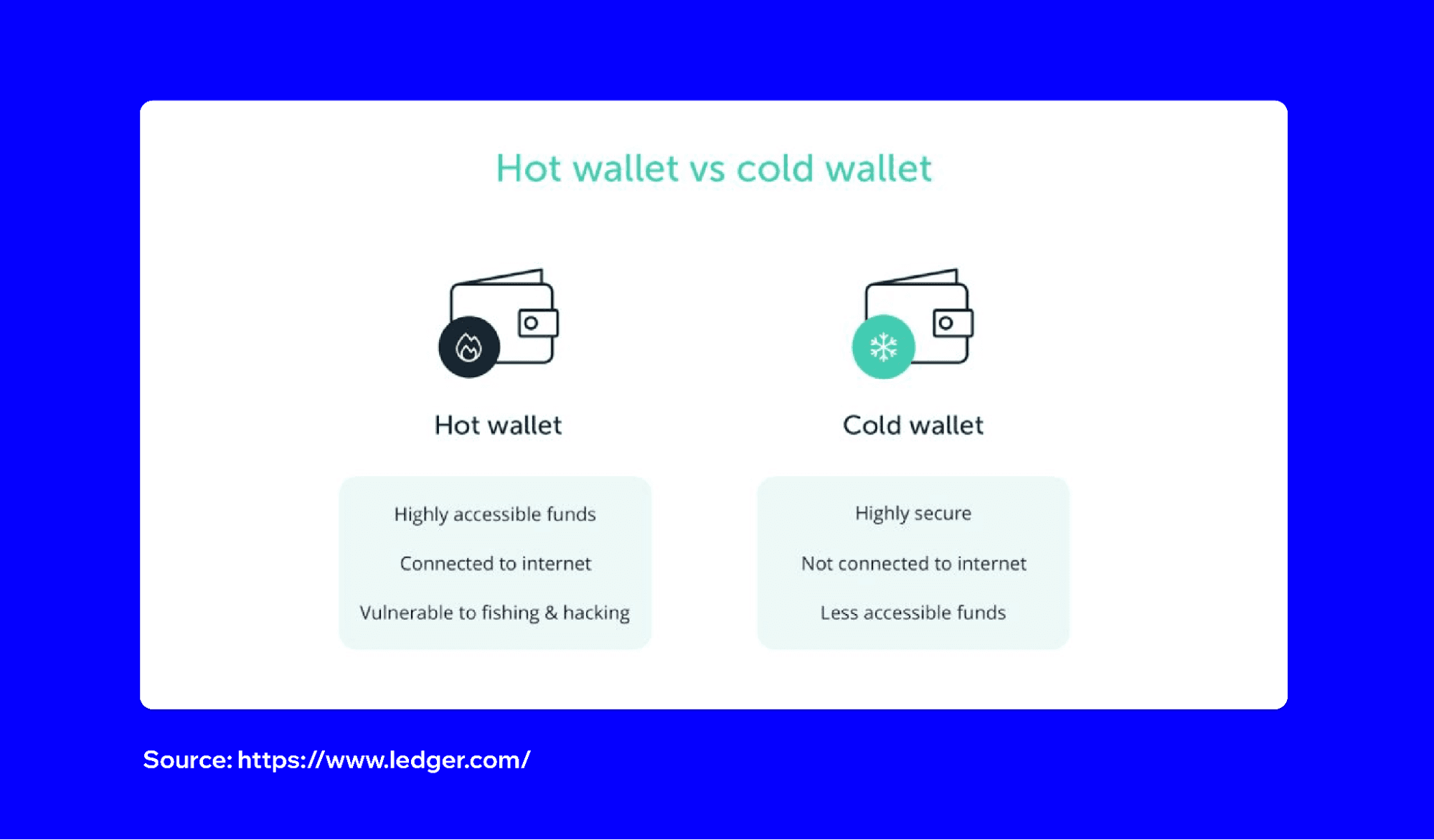
Keeping all your crypto in a single wallet creates a single point of failure. If that wallet gets compromised, you lose everything. Dividing your holdings across multiple wallets based on their purpose significantly reduces this risk.
Dividing holdings across multiple wallets based on their purpose reduces risk. Many crypto users maintain separate wallets for different activities. A cold storage wallet holds long-term assets that don't need frequent access and remains offline as much as possible, containing the bulk of crypto holdings. An investing wallet holds funds for active trading, staking, and other yield-generating activities. An exploration wallet contains smaller amounts for interacting with new decentralized applications, minting NFTs, or experimenting with emerging protocols.
Having a separation strategy means that even if your exploration wallet gets drained by a malicious smart contract or phishing attack, your long-term holdings and active investments remain safe. The exploration wallet should never hold more than you're comfortable losing entirely, since interacting with unknown dApps always carries some risk.
3. Use Hardware Wallets with Trust Wallet Browser Extension
Hardware wallets provide the strongest security for your crypto because they keep your private keys on a physical device that never connects directly to the internet. When you pair a hardware wallet with the Trust Wallet Browser Extension, you get both maximum security and convenient access to decentralized applications.
The Trust Wallet Browser Extension lets you manage your crypto assets and interact with Web3 applications directly from your browser. When you connect a hardware wallet to this extension, every transaction requires physical confirmation on the hardware device itself. Even if malware infects your computer, attackers cannot move your funds without physical access to your hardware wallet.
Only purchase hardware wallets directly from the manufacturer to avoid tampered or counterfeit devices.
4. Enable Two-Factor Authentication on All Accounts
Two-factor authentication adds a critical second layer of protection to any account that holds or manages your digital assets. Even if someone steals your password through a data breach or phishing attack, they still cannot access your account without the second authentication factor.
Enable 2FA on your cryptocurrency exchange accounts, email accounts associated with crypto services, and any wallets that offer this feature. Authenticator apps provide better security than SMS-based 2FA because text messages can be intercepted through SIM-swapping attacks. Hardware security keys like YubiKey offer the strongest form of 2FA since they require physical possession of the device.
5. Keep Your Wallet Software Updated
Wallet developers constantly identify and patch security vulnerabilities that could expose your funds to attackers. When you don't install updates as they’re released, you leave your wallet vulnerable to exploits that developers have already fixed. Hackers actively scan for people running outdated software because these targets offer easy access through known security holes.
Updates ensure your wallet remains compatible with evolving blockchain networks. When blockchains undergo upgrades or forks, your wallet software needs corresponding updates to function correctly. Check for updates at least monthly. Always download updates only from official sources like the wallet's website or verified app store listings to avoid installing malicious software disguised as legitimate updates.
How Trust Wallet's Security Scanner Protects You
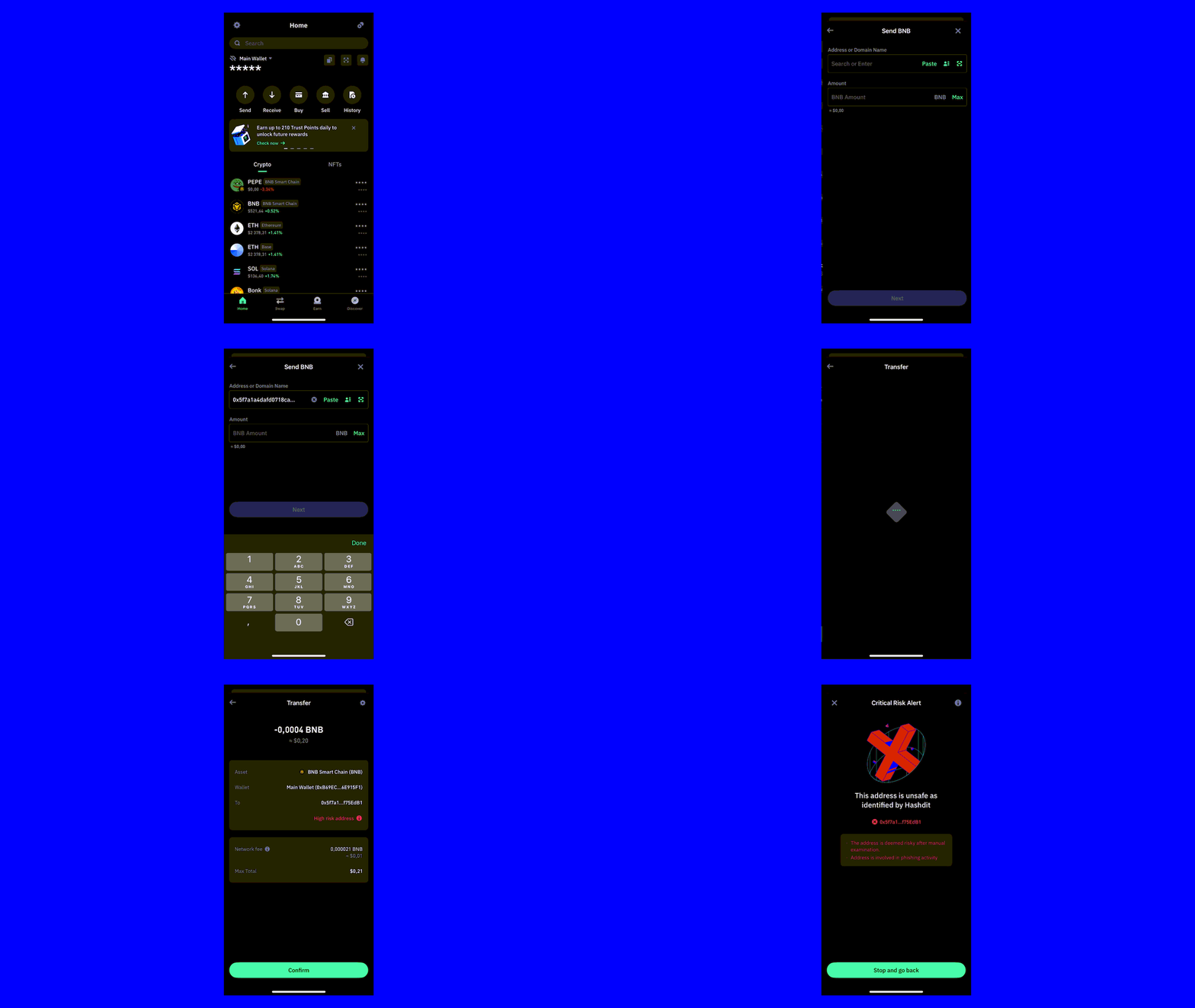
Trust Wallet's Security Scanner shows how modern wallet security enables confident ownership. The Security Scanner analyzes every transaction before you complete it. When you send funds, connect to a dApp, or interact with a smart contract, the scanner checks addresses against continuously updated threat databases.
High-risk transactions trigger clear warnings that explain the specific threat. You stay in complete control. The scanner provides information, but you make the final decision. This balance defines modern wallet security: strong protection that enables confident participation rather than creating barriers to use.
Your Ongoing Security Responsibility
Protecting your crypto requires ongoing vigilance rather than a one-time setup. The threat landscape constantly changes as attackers develop new techniques and target new vulnerabilities. Regularly review your security practices and stay informed about emerging threats.
Cryptocurrency has no centralized institutions that can reverse fraudulent transactions or restore stolen funds. The security of your digital assets is entirely yours.
Download Trust Wallet Disclaimer: Content is for informational purposes and not investment advice. Web3 and crypto come with risk. Please do your own research with respect to interacting with any Web3 applications or crypto assets. View our terms of service. Join the Trust Wallet community on Telegram. Follow us on X (formerly Twitter), Instagram, Facebook, Reddit, Warpcast, and Tiktok >Note: Any cited numbers, figures, or illustrations are reported at the time of writing, and are subject to change.