



공지사항
Introducing Address Poisoning Protection on Trust Wallet
게시물 공유
요약
Trust Wallet now detects address poisoning in real time. Learn what this scam is, how it targets crypto users, and how we built protection against it.
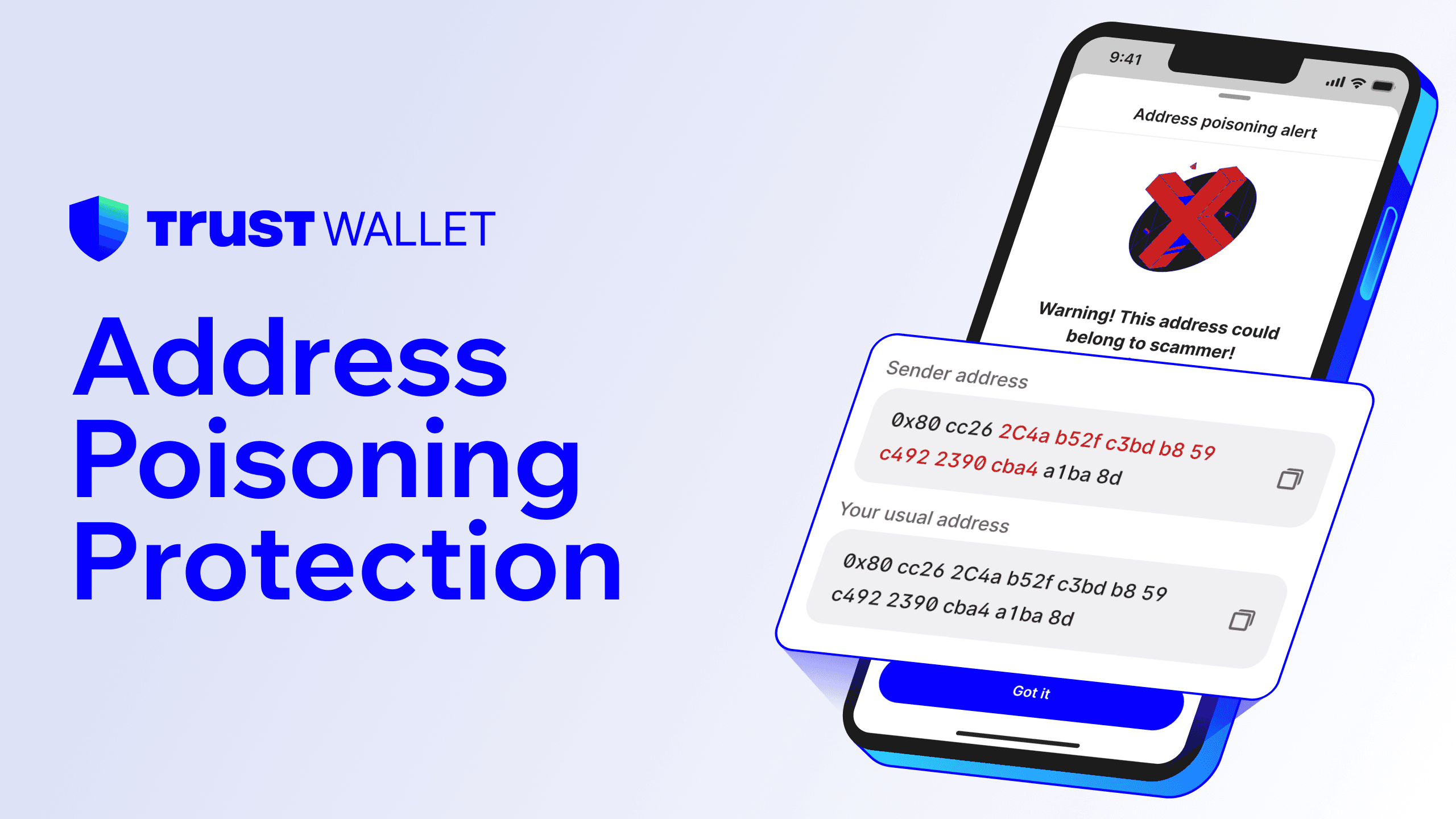
We're excited to introduce Address Poisoning Protection on Trust Wallet — a new security feature that checks every destination address before you send, and warns you when something looks wrong.
Address poisoning is one of the fastest-growing threats in crypto. Attackers inject fake transactions into your wallet history using addresses that look almost identical to ones you've sent to before. When you copy an address from your history without checking it closely, your funds go to the attacker instead. It's a simple tactic. And it works.
More than 225 million poisoning attacks have been detected to date. Over $500 million has been confirmed stolen. That's roughly 34,000 attacks every hour. Address Poisoning Protection is Trust Wallet's direct response to this threat.
What is Address Poisoning?
When you send crypto, you often copy a wallet address from your transaction history. Attackers exploit this habit by sending you a tiny amount from an address that visually mimics one you've used before — same first few characters, same last few characters, nearly identical in the middle.
You glance at it. It looks right. You send.
The difference between your real recipient's address and the attacker's address is a handful of characters buried in the middle — easy to miss, expensive to ignore. Address poisoning attacks are designed to be invisible until it's too late.
How Address Poisoning Protection Works
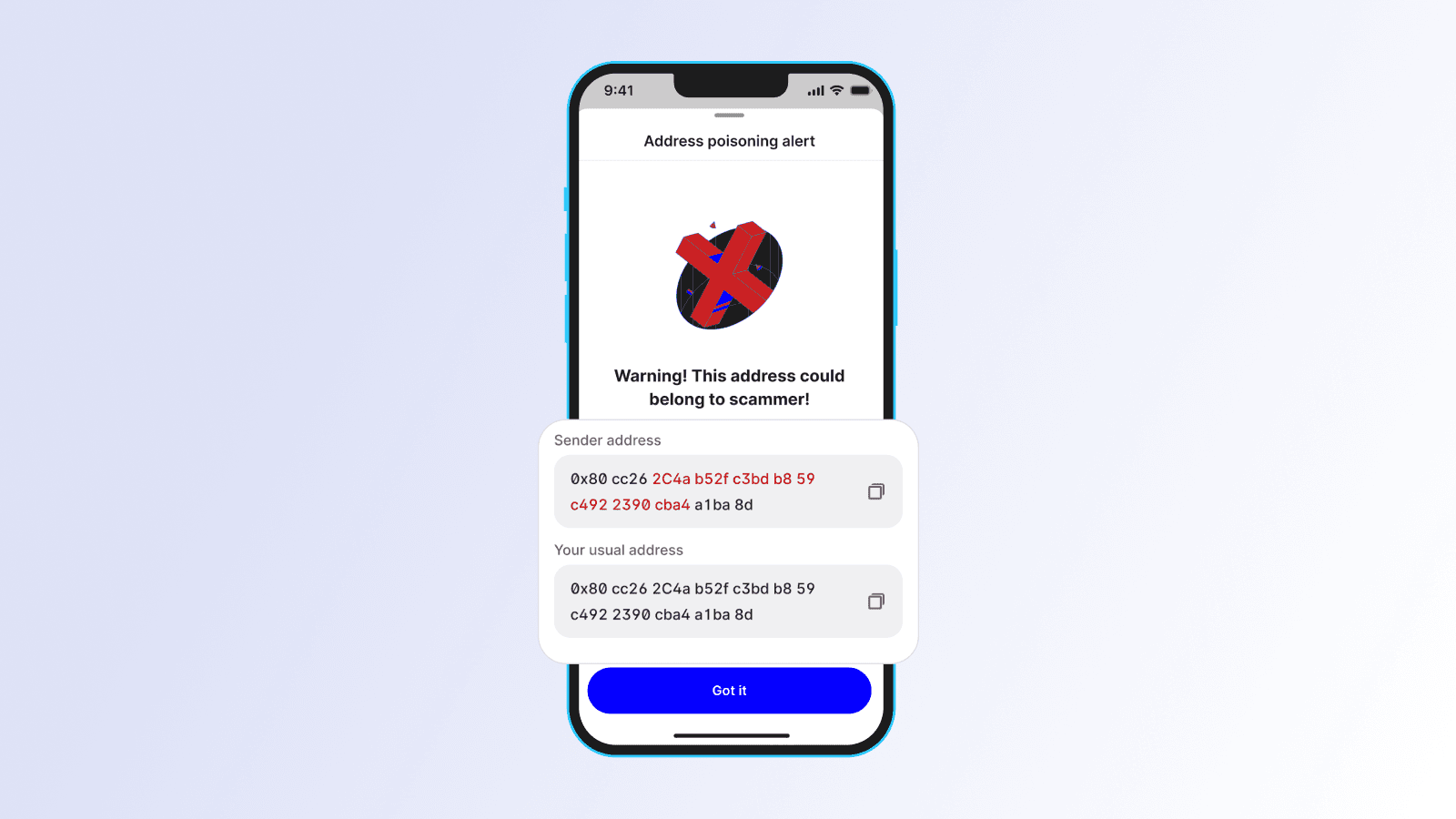
When you enter or paste a destination address — in the send flow or by copying an address — Trust Wallet automatically runs a real-time check against a database of known scam and lookalike addresses.
For high-severity threats, you'll see a blocking warning before your transaction is submitted. The warning shows a side-by-side comparison of the address you're about to send to and the legitimate address it's mimicking, so you can see exactly what's wrong.
There's nothing to enable. The protection runs automatically in the background every time you send.
Here's what happens step by step:
You enter or paste a destination address in the send flow.
Trust Wallet checks the address against the Intel Security API in real time.
If the address is flagged as a high-severity threat, a blocking warning appears before you can proceed.
The warning shows a side-by-side address comparison so you can clearly see the discrepancy.
You choose to cancel the transaction or, if you're certain the address is correct, proceed with full awareness.
Supported Blockchains
Address Poisoning Protection is available on 32 EVM chains at launch:
Ethereum Mainnet
BNB Smart Chain
Polygon
Optimism
Arbitrum One
Arbitrum Nova
Avalanche
Base
opBNB
zkSync Era
Linea
Scroll
Blast
Mantle
Abstract
Sonic
Berachain
Monad
Taiko
Unichain
World Chain
Gnosis
Celo
Cronos
Moonbeam
Moonriver
Xai
XDC Network
Klaytn
HECO
OKX Chain
Support for more chains is on the way.
Why This Matters for Self-Custody
Self-custody means you're in control of your assets. No intermediary, no third party standing between you and your funds. That freedom is real — and it comes with real responsibility.
Most users who lose funds to address poisoning blame themselves, or their wallet. The attacker counts on that. A self-custodial wallet that gives you control without giving you the tools to exercise it safely isn't doing its job.
Address Poisoning Protection is part of how Trust Wallet takes security seriously — not as a checkbox, but as a core part of what it means to own your assets with confidence. We've built on top of industry security infrastructure to make this detection fast, reliable, and automatic, so protection doesn't require anything extra from you.
Frequently Asked Questions
What is address poisoning? Address poisoning is a scam where attackers send small transactions to your wallet from addresses that visually resemble ones you've previously sent to. The goal is to get you to accidentally copy and use their address the next time you send funds.
Will this feature block my transaction automatically? For high-severity flagged addresses, you'll see a blocking warning before your transaction is submitted. You'll be shown a side-by-side comparison of the suspicious address and the legitimate one it mimics. You retain the final decision, but you won't proceed without seeing the warning first.
Do I need to turn this on? No. Address Poisoning Protection runs automatically in the send and copy flows. There's nothing to configure.
Which chains are supported? At launch: Ethereum Mainnet, BNB Smart Chain, Polygon, Optimism, Arbitrum One, Arbitrum Nova, Avalanche, Base, opBNB, zkSync Era, Linea, Scroll, Blast, Mantle, Abstract, Sonic, Berachain, Monad, Taiko, Unichain, World Chain, Fantom, Gnosis, Celo, Cronos, Moonbeam, Moonriver, Xai, XDC Network, Klaytn, HECO, OKX Chain. More chains will be added over time.
What powers the detection? Address checks are run in real time against the Intel Security API, which aggregates data from leading blockchain security infrastructure to identify known scam and poisoned addresses.
What if I get a warning but my address is actually correct? The warning will show you a detailed comparison so you can verify. If you've independently confirmed the address is legitimate, you can choose to proceed. The feature is designed to flag risk — not to block you permanently.
Owning your assets is only meaningful when you can trust the transactions you make. Address Poisoning Protection is another step toward a wallet where confidence and control go hand in hand — because security isn't a feature, it's the foundation.
Disclaimer: Content is for informational purposes and not investment advice. Web3 and crypto come with risk. Please do your own research with respect to interacting with any Web3 applications or crypto assets. View our terms of service.
Join the Trust Wallet community on Telegram. Follow us on X (formerly Twitter), Instagram, Facebook, Reddit, Warpcast, and Tiktok
Note: Any cited numbers, figures, or illustrations are reported at the time of writing, and are subject to change.