




Criptomoedas estáveis
What is a Stablecoin?
Partilhar publicação
Em resumo
Discover what stablecoins are, how USDT, USDC, and DAI work, their real-world uses, key risks, and how to buy them using Trust Wallet.
Crypto moves fast. Prices can swing in an hour, making investing in crypto exciting but unpredictable. Stablecoins give you the best of both worlds: the speed and programmability of blockchain with the price stability of the US dollar. This article explains what stablecoins are, which ones matter, how they're actually used, what can go wrong, and how to get your hands on some through Trust Wallet.
Stability by Design
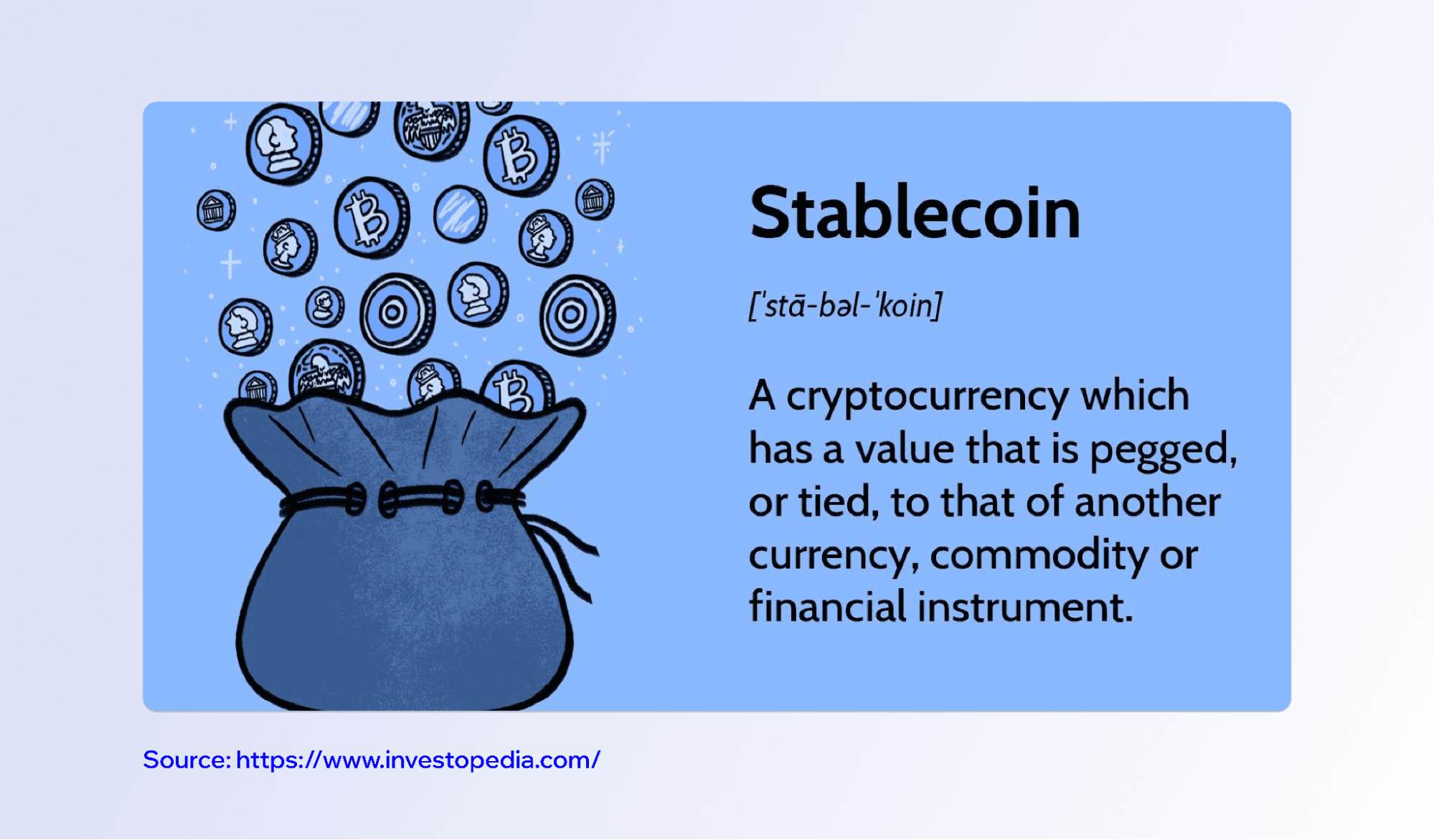
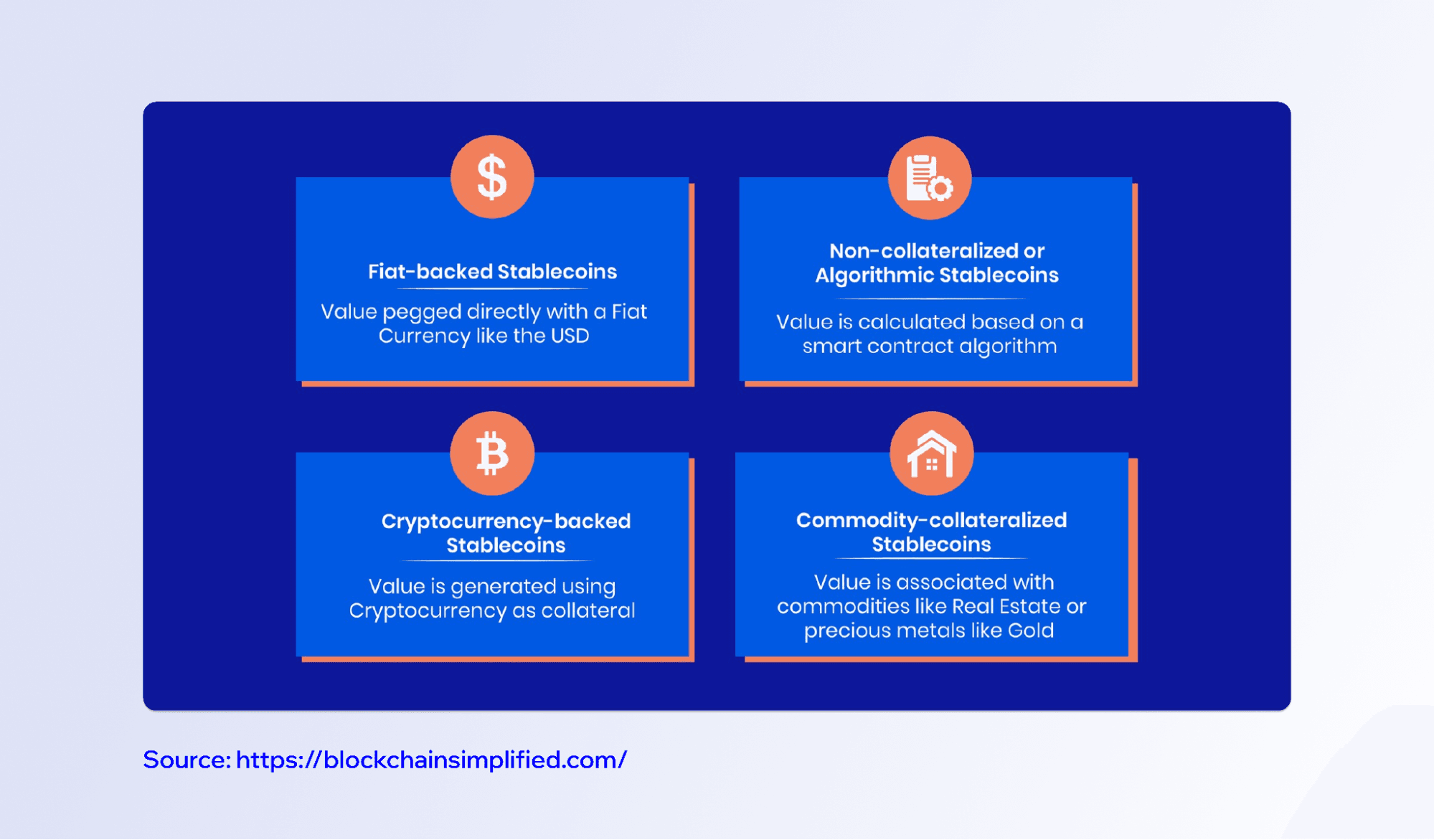
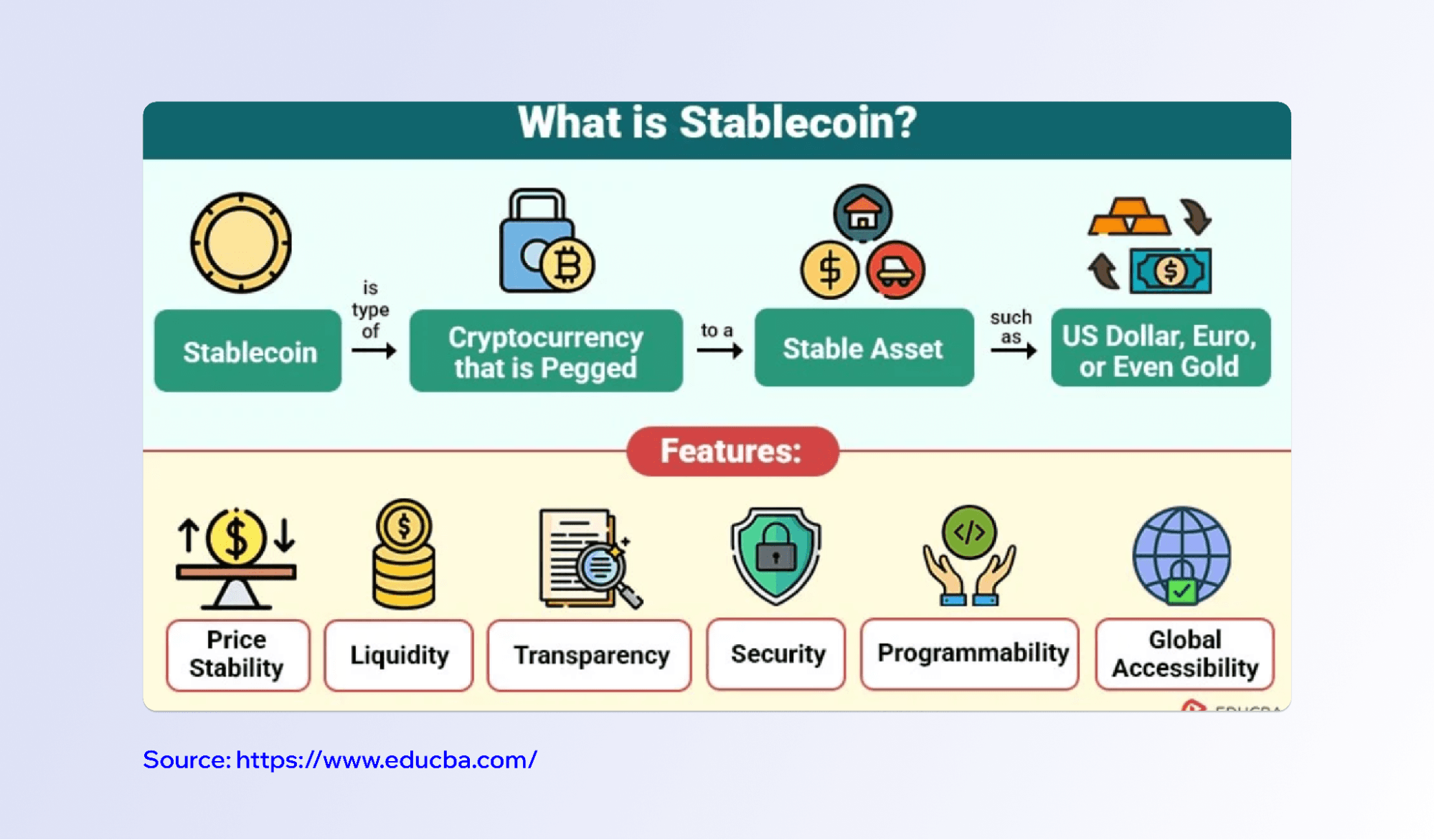
A stablecoin is a cryptocurrency that is pegged to a stable asset like the U.S. Dollar. The peg means that one unit of the stablecoin should always be worth approximately one unit of the currency or asset it tracks. There are four main ways a stablecoin keeps its price steady:
Fiat-collateralized stablecoins are the most widely used. The issuer holds fiat currency in a bank account to back every token it issues.
Crypto-collateralized stablecoins use on-chain crypto assets as backing, but require more collateral than the stablecoin is worth, so there is a buffer if prices drop.
Algorithmic stablecoins use code and token supply mechanics to maintain price stability, with no hard asset backing.
Commodity-collateralized stablecoins represent a specific amount of a tangible asset held in reserve, like gold, silver, or real estate.
The Most Widely Used Stablecoins
The three stablecoins you will encounter most frequently are USDT (Tether), USDC (USD Coin), and DAI.
USDT is the largest by market cap and the most widely available across exchanges and blockchains. USDC is the more regulated of the two fiat-backed options. Circle, its issuer, publishes independent audits of its reserves, which makes USDC a popular choice for people who want documented proof that the backing is real.
DAI is issued by a decentralized protocol called MakerDAO. DAI is backed by crypto assets locked in smart contracts rather than dollars in a bank. All three are pegged to the US dollar.
How People Use Stablecoins
Stablecoins serve as a natural entry point into crypto. You hold value in a familiar dollar-pegged currency and can move into other assets like Bitcoin or Ethereum at any point.
Stablecoins are the backbone of DeFi. On DeFi platforms, you are able to lend your stablecoins to others and earn interest, or deposit them into liquidity pools that power trading on decentralized exchanges.
Sending money across borders is one of the most widely used real-world applications of stablecoins. Sending USDC from one wallet to another anywhere in the world takes seconds and costs a fraction of what a bank charges. The recipient does not need a bank account to receive it.
In countries where the local currency loses value rapidly, people use stablecoins to store their savings without needing a traditional bank account. Anyone with a smartphone can access a stable currency that their own financial system may not be able to offer them.
What Can Go Wrong
Stablecoins carry real risks. A depeg happens when a stablecoin's price moves away from the $1 value it is supposed to hold, either dropping below it or, less commonly, rising above it. This can be temporary and recover within hours, or it can be permanent.
In May 2022 TerraUSD (UST), an algorithmic stablecoin, collapsed. UST kept its $1 price through a system linked to a sister token called LUNA. When people lost confidence and started selling, the system could not hold. LUNA's value crashed to near zero. Around $60 billion was wiped out in a matter of days. There were no real assets backing LUNA or UST, so there was nothing to stop the fall.
Stablecoins backed by dollars have had close calls. In March 2023, USDC dropped to around $0.88 after its issuer, Circle, revealed that $3.3 billion of its cash reserves were held in Silicon Valley Bank when the bank suddenly collapsed. DAI wobbled at the same time because a large portion of its backing was tied to USDC. Both recovered after US authorities intervened to protect the bank's depositors. The episode showed that even well-run stablecoins can be shaken by events outside the crypto world.
How to Buy Stablecoins Using Trust Wallet
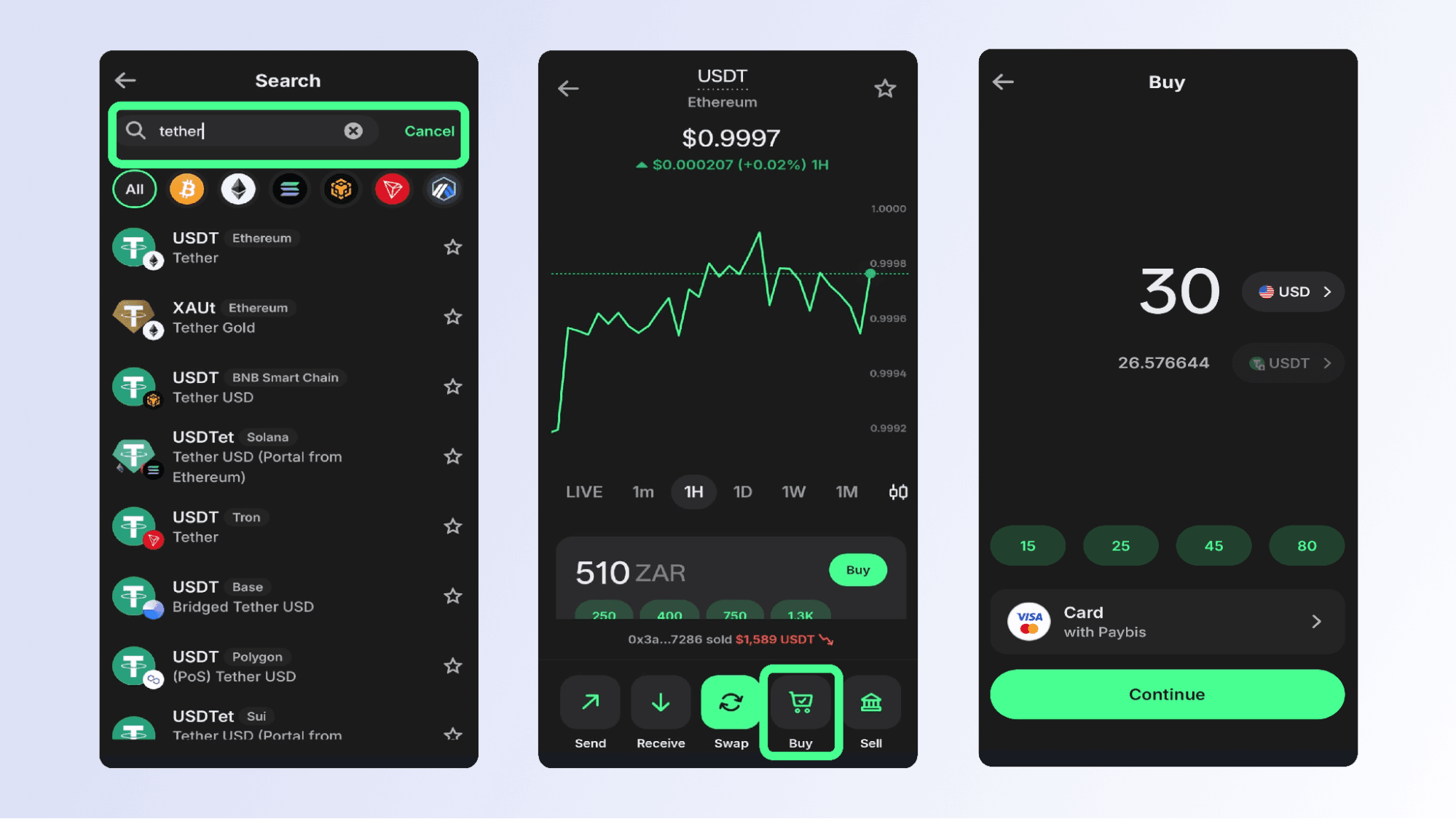
You can buy crypto, including stablecoins, using Trust Wallet, via our trusted partners. In this example, we have used Tether (USDT). Here's how:
Select "Buy" from the home screen.
If using the mobile app:
Search "Tether" or "USDT" and select it.
Choose your preferred currency, then enter the amount of USDT you want to purchase.
Select the third-party provider & payment method you'd like to use.
Select the Buy button and complete the remaining steps.
If using the browser extension:
Choose your preferred currency and amount, then choose Tether (USDT).
Select your preferred third-party provider.
Complete the remaining steps.
Stablecoins can reside on multiple blockchains. Always check you are using the correct network when you purchase or swap Stablecoins.
Stablecoins Are a Tool, Not Only a Hedge
Stablecoins enable you to hold value on-chain without betting on price movements, move money globally without involving a bank, and participate in DeFi without denominating everything in volatile assets. The key is choosing the right one for your purpose. Choose USDC if regulatory transparency matters to you, USDT if liquidity and network availability are the priority, or DAI if you want decentralized backing. Understand the mechanics, respect the risks, and use them as a bridge between the traditional financial world and everything crypto has to offer.
Disclaimer: Content is for informational purposes and not investment advice. Web3 and crypto come with risk. Please do your own research with respect to interacting with any Web3 applications or crypto assets. View our terms of service.
Join the Trust Wallet community on Telegram. Follow us on X (formerly Twitter), Instagram, Facebook, Reddit, Warpcast, and TikTok
Note: Any cited numbers, figures, or illustrations are reported at the time of writing, and are subject to change.