

Staking rewards come from new coins the network issues to validators for securing the chain, and your share is proportional to how much you have staked. Rates are quoted two ways: APR is the simple annual rate with no compounding, while APY assumes your rewards are continuously restaked. The difference is real but modest at typical rates — 5% APR works out to roughly 5.1% APY with daily compounding.
Where Do Staking Rewards Actually Come From?
Proof-of-stake networks pay validators to process transactions and produce blocks. The payment has two sources: newly issued coins (the network's inflation schedule) and a share of transaction fees. Validators pass most of this on to the people who staked with them, keeping a commission for running the infrastructure.
This means rewards are not interest paid by a company and not yield conjured from nowhere — they are your cut of the network's security budget. That is also why rewards are paid in the same coin you staked: you are earning more of the asset, not a separate cash payment. The proof-of-stake glossary entry explains the underlying mechanism.
How Is My Individual Reward Calculated?
Your reward is your fraction of the validator's stake, applied to what the validator earns, minus its commission. Simplified:
your reward = validator rewards × (your stake ÷ total stake with that validator) × (1 − commission)
Three variables move your real return over time. Network-wide staking participation matters most: when more coins are staked overall, the same issuance is split among more participants and everyone's rate falls. Validator performance matters too — a validator that is offline earns nothing during that window. And commission is the visible cost you can compare directly when choosing where to stake.
What Is the Difference Between APR and APY?
| APR | APY | |
|---|---|---|
| Stands for | Annual Percentage Rate | Annual Percentage Yield |
| Compounding | None — simple rate | Included — rewards earn rewards |
| Assumes | You never restake rewards | Rewards are restaked automatically |
| Same rate looks | Lower | Higher |
APR answers "what does the protocol pay per year on my original stake?" APY answers "what will I actually end up with if every reward is restaked as it arrives?" Neither is dishonest, but they are different numbers for the same underlying rate, and marketing tends to quote whichever looks bigger.
Why Does 5% APR Equal About 5.1% APY?
Compounding means each reward starts earning rewards of its own. At 5% APR compounded daily, you earn 5% ÷ 365 each day on a balance that grows slightly every day. Over a year that accumulates to about 5.13% — call it 5.1%. The gap grows with the rate and the compounding frequency, but at single-digit staking rates it stays small. The practical lesson: a platform advertising "5.1% APY" and one advertising "5% APR" are offering essentially the same thing. Always check which figure is being quoted before comparing.
Why Do Advertised Rates Keep Changing?
Because every input is dynamic. Networks adjust issuance according to their monetary policy, total staked supply rises and falls as people stake and unstake, and fee revenue tracks network activity. A quoted rate is a snapshot, not a promise. Treat any advertised staking rate as an estimate that will drift, and be suspicious of any platform guaranteeing a fixed high return — sustainable staking yield comes from protocol issuance, which no third party controls.
Remember also that rewards are paid in the staked coin, so your token balance can increase over time — but the coin's fiat value still moves independently with the market, and validator performance or network conditions affect how much you actually earn.
Tracking Staking Rewards with Trust Wallet
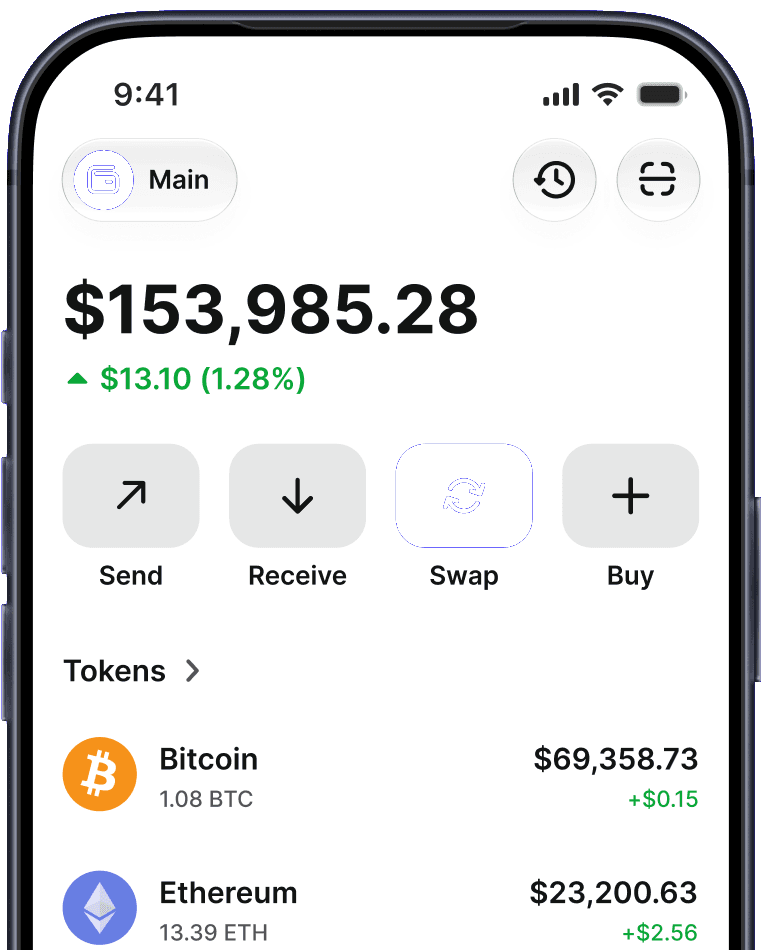
Trust Wallet shows current estimated rates for each supported asset before you stake, so you can compare networks side by side — including ETH, SOL, BNB, TRX, ADA, DOT, ATOM, and more. Staking happens in-app from a self-custody wallet: open the asset, choose Stake, pick an amount and confirm. See live options at the Trust Wallet staking page, or start with the basics at the staking glossary entry.
Disclaimer: Content is for informational purposes and not investment, financial, or tax advice. Web3 and crypto come with risk. Please do your own research with respect to interacting with any Web3 applications or crypto assets. View our terms of service.