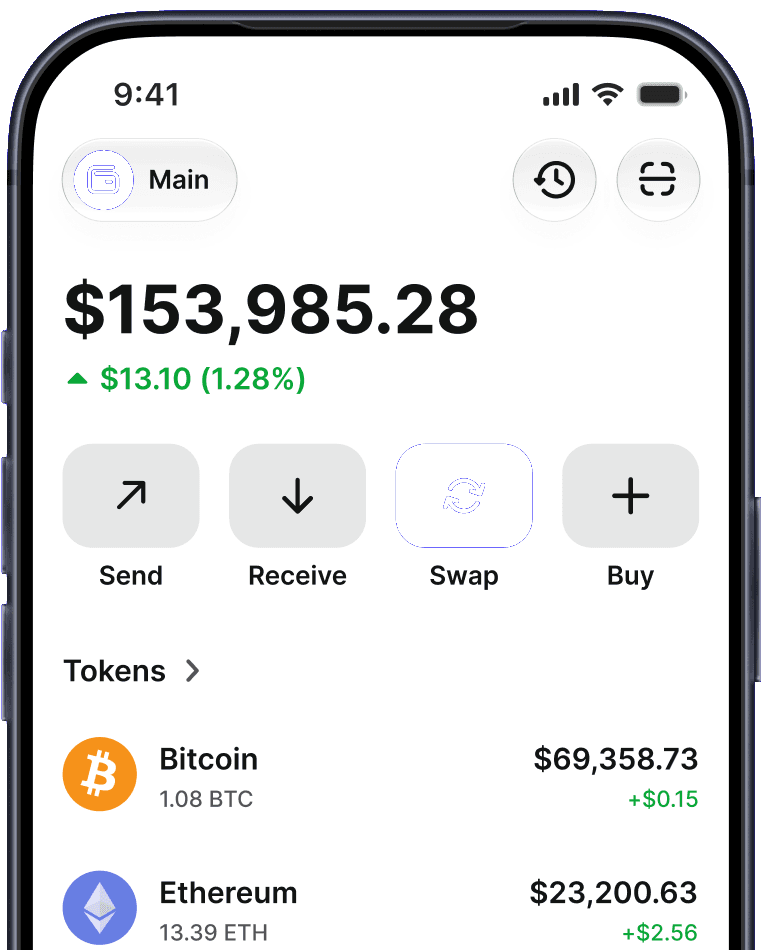



What Is a Custodial Wallet?
A custodial wallet is a crypto wallet where a third party — typically a centralized exchange or service — holds and manages your private keys for you. You can log in and use your funds, but you don't actually control the keys; the custodian does. This is the opposite of a non-custodial (self-custody) wallet, where you hold your own keys.
The phrase "not your keys, not your coins" captures the core trade-off: with a custodial wallet, your access depends on the custodian.
How Does a Custodial Wallet Work?
You create an account with a custodial provider (e.g. an exchange).
The provider generates and stores the private keys on your behalf.
You access your funds through a username and password (and usually 2FA).
The provider executes transactions for you when you request them.
You trust the provider to keep funds safe and available.
Custodial vs Non-Custodial Wallet
| Feature | Custodial Wallet | Non-Custodial Wallet |
|---|---|---|
| Who holds the keys | The provider | You |
| Account recovery | Provider can reset access | Only your recovery phrase |
| KYC | Usually required | Not required to hold keys |
| Counterparty risk | Yes — depends on provider | No third party holds funds |
| Control | Limited | Full |
Pros and Cons of Custodial Wallets
Pros: easier onboarding, password recovery if you forget login details, and integrated trading features.
Cons: you don't control your keys, you're exposed to the provider's solvency and security, funds can be frozen, and access may require KYC. If the custodian is hacked or fails, your funds can be at risk.
Why Many Users Prefer Self-Custody
With self-custody, no third party can freeze, lose, or misuse your funds — you hold the keys. The trade-off is responsibility: you must safeguard your own recovery phrase. For users who value control and censorship resistance, non-custodial wallets are the preferred choice.
Custodial Wallets and Trust Wallet
Trust Wallet is a non-custodial wallet — the opposite of a custodial wallet. You generate and control your own private keys, secured by your secret recovery phrase, and no third party (including Trust Wallet) can access or freeze your funds. Across 100+ blockchains, your assets stay fully in your control: your keys, your coins.