


What Is an MPC Wallet?
An MPC wallet uses multi-party computation to split a private key into several shares held by different parties or devices. Transactions are signed jointly through a cryptographic protocol, and the complete key never exists in any single place — not even for a moment during signing.
This is different from a multisig wallet, which uses several complete keys and records its rules on-chain. MPC happens off-chain at the cryptography layer: the network sees one ordinary signature, while behind the scenes two or more share-holders — your phone, a server, a backup — computed it together.
How an MPC Wallet Works
Key generation creates shares directly on separate devices or servers; the full key is never assembled.
To sign, a threshold of share-holders (for example, two of three) runs a joint computation.
Each participant uses only its own share; the output is a single valid signature for the network.
If one share is lost or compromised, the remaining shares can refresh the setup without moving funds.
Trade-Offs to Understand
No single point of theft: stealing one share isn't enough to sign.
Chain-agnostic: the network can't tell an MPC signature from a normal one.
Trust the setup: if a company holds enough shares, custody quietly shifts to them — read who holds what.
Recovery depends on the provider's process, not a phrase you can take anywhere.
MPC Wallets and Trust Wallet
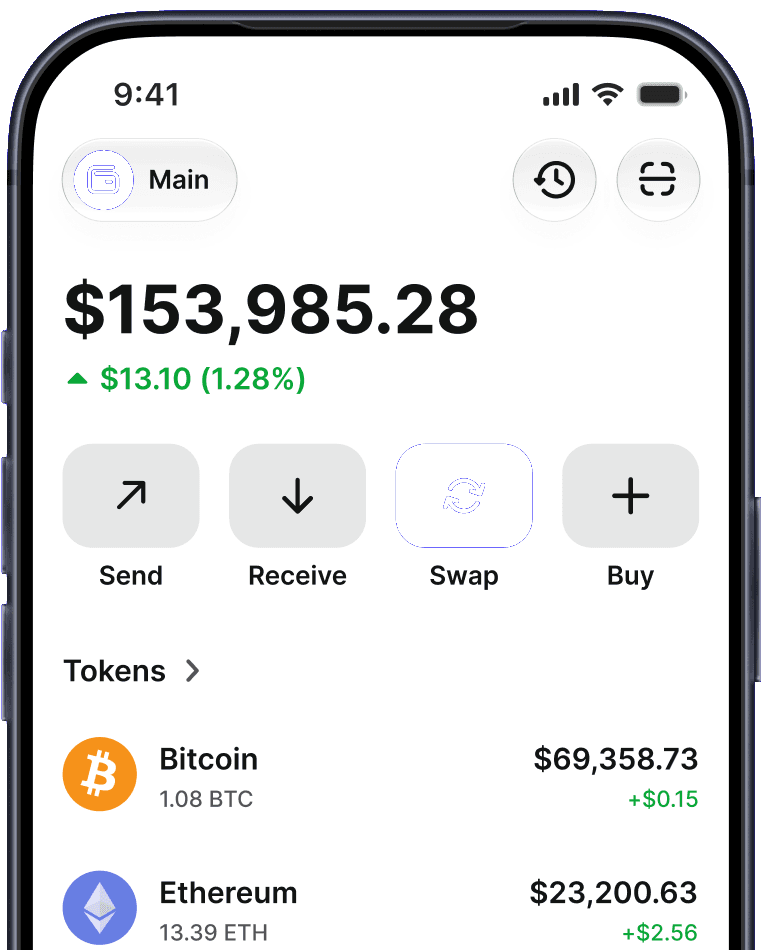
Trust Wallet takes the classic self-custody approach: your keys are generated from a secret phrase that lives with you and is portable to any compatible wallet, with Encrypted Cloud Backup as an optional layer. MPC is a legitimate design — but the key question for any wallet is the same: who holds enough material to sign, and can you recover without their permission?