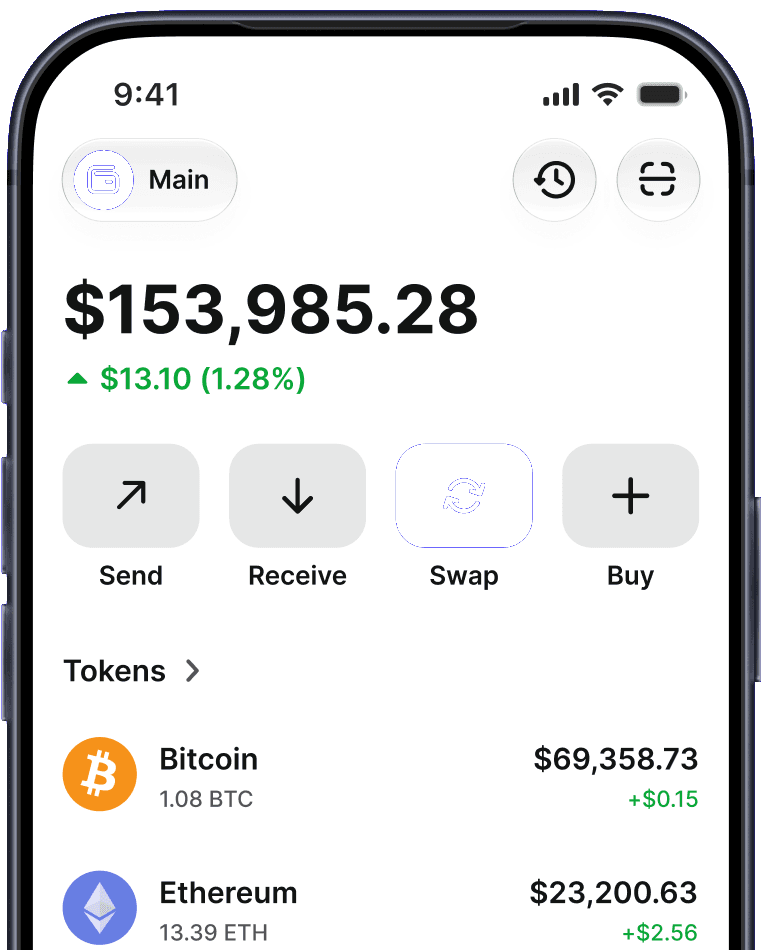


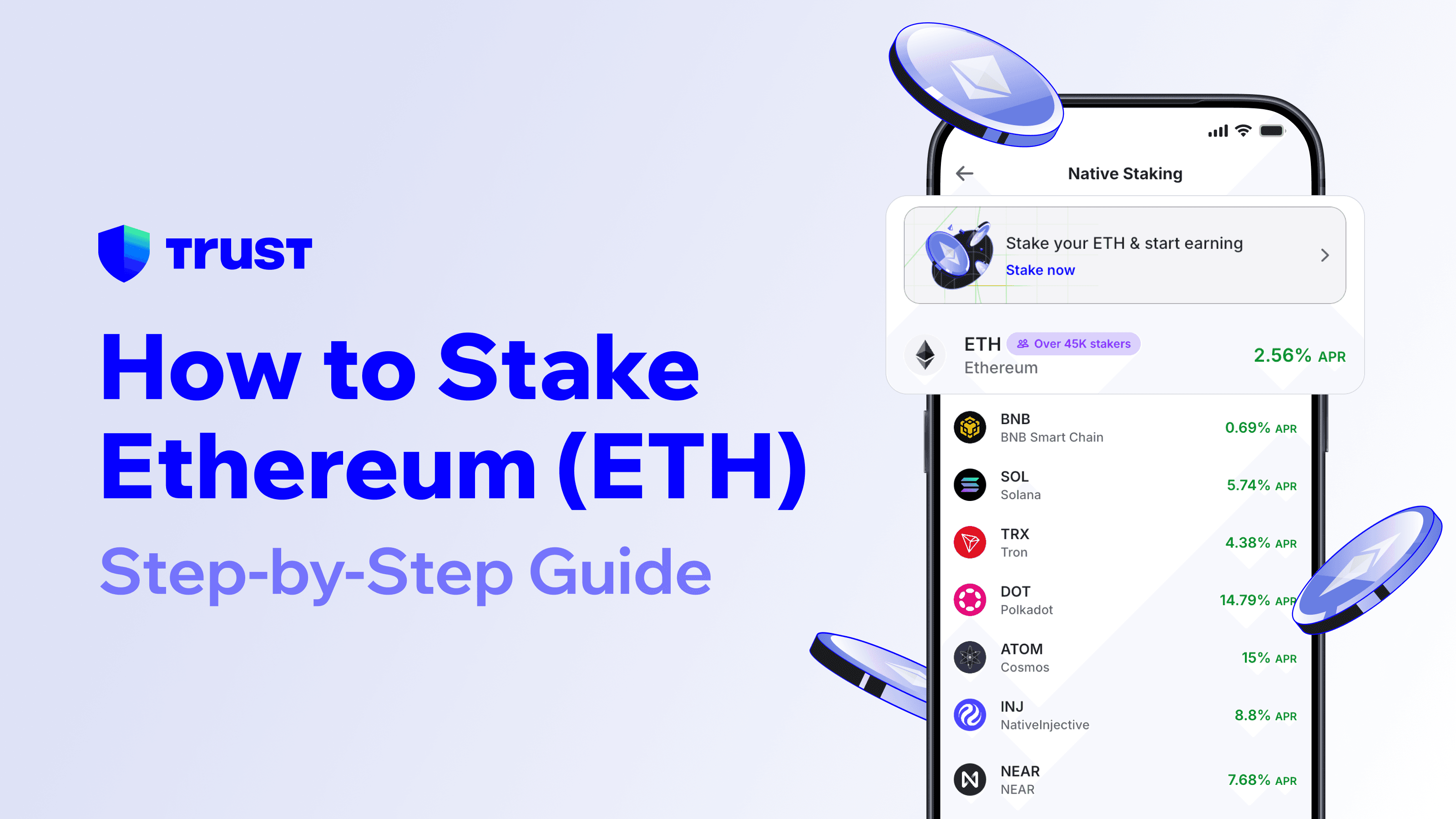
You can stake Ethereum (ETH) from a self-custody wallet in minutes, without running your own validator. You keep control of your keys the whole time, and the minimum amount is far below the 32 ETH required to operate a solo validator. Staking through a wallet delegates your ETH to professional validators, and you earn a share of the network rewards they generate.
What Is Ethereum Staking?
Ethereum runs on proof-of-stake, which means the network is secured by validators who lock up ETH as collateral instead of by energy-hungry mining. Validators propose and confirm blocks, and the protocol pays them newly issued ETH plus a share of transaction fees for doing the job honestly. If a validator cheats or fails badly, part of its stake is destroyed — a penalty called slashing.
When you stake through a wallet, you are not becoming a validator yourself. The mechanics differ from delegation networks like Solana or BNB Chain, where staked coins stay at your address. On Ethereum, staked ETH does leave your wallet: it is locked in the network's staking system while it earns, and it comes back through a withdrawal you sign. What stays with you is control — nothing is deposited or withdrawn without your signature. You contribute ETH to a staking provider's validator set and receive a proportional share of the rewards, minus the provider's commission.
How Much ETH Do I Need to Stake?
Running your own validator requires exactly 32 ETH, plus dedicated hardware and constant uptime. Most readers don't need to — solo validation suits people who want to run their own infrastructure. Pooled staking through a wallet lets you start with a small fraction of that amount, because your ETH is combined with other users' stakes to fill validators.
The practical minimum depends on the staking provider, but it is low enough that the deciding factor should be how much ETH you are comfortable locking, not the threshold itself.
How Do I Stake ETH Step by Step?
From a self-custody wallet, the process takes a few minutes:
Install the wallet and back up your secret recovery phrase somewhere offline. This phrase is the only way to restore access, so treat it like the keys to a safe.
Add the ETH you want to stake, keeping a little extra unstaked to cover network fees.
Open the ETH asset, choose Stake, pick an amount and confirm the transaction.
Wait for the stake to activate. Any available rewards then accrue automatically to your position; amounts are variable and not guaranteed.
To exit, choose Unstake and confirm. Your ETH returns to your spendable balance once the withdrawal is processed.
The entire process happens on-chain from an address you control.
How Long Does It Take to Unstake ETH?
Ethereum does not have a fixed unbonding period. Withdrawals pass through a variable exit queue whose length depends on how many validators are exiting at the same time. In quiet conditions it can be short; in busy periods it stretches. Plan for the possibility of a wait rather than assuming instant access, and keep any ETH you might need on short notice unstaked.
Is Staking ETH Safe?
Staking ETH from a self-custody wallet carries risks worth understanding — some of the main ones, not an exhaustive list. Price risk: your ETH can fall in value while staked, just as it can while sitting idle. Slashing: if a validator you are staked with misbehaves, penalties can reduce the stake — uncommon on Ethereum, and reduced by using established providers. Liquidity: the exit queue means you cannot always sell instantly.
Both the deposit and the withdrawal are on-chain transactions you can verify on any block explorer — there is no company account balance you have to take on faith. For a full breakdown of the general risks, see the staking glossary entry.
Staking ETH with Trust Wallet
Trust Wallet lets you stake ETH directly in the app while keeping full self-custody — your secret recovery phrase stays with you. The wallet supports 100+ blockchains, and its built-in Security Scanner checks transactions against known risk signals and warns you before you confirm — a prompt to look closer, not a guarantee. You can also stake SOL, BNB, TRX, ADA, DOT, ATOM, and more from the same app. Start at the Ethereum staking page, or compare all supported assets on the main staking page.
Disclaimer: Content is for informational purposes and not investment, financial, or tax advice. Web3 and crypto come with risk. Please do your own research with respect to interacting with any Web3 applications or crypto assets. View our terms of service.