





Trust Blog
Explore the latest topics and insights to help you navigate Web3 with confidence and ease.
Follow Trust Wallet on
Swap Eligible Staked and Wrapped Assets with 0% Swap Fees in Trust Wallet
Swap eligible staked and wrapped assets with 0% Trust Wallet swap fees when swapping between eligible pairs on the same supported chain across Ethereum, Solana, and BNB Chain.
Swap selected stablecoins with 0% fees on Trust Wallet
Swap eligible stablecoins with 0% swap fees on the same chain, across supported chains in Trust Wallet except Ethereum.
Phase 1 and Phase 2 of Ondo Trading Competition rewards are here: claim yours on Merkl
The Ondo Trading Competition has officially concluded, and rewards are now available to claim on Merkl.
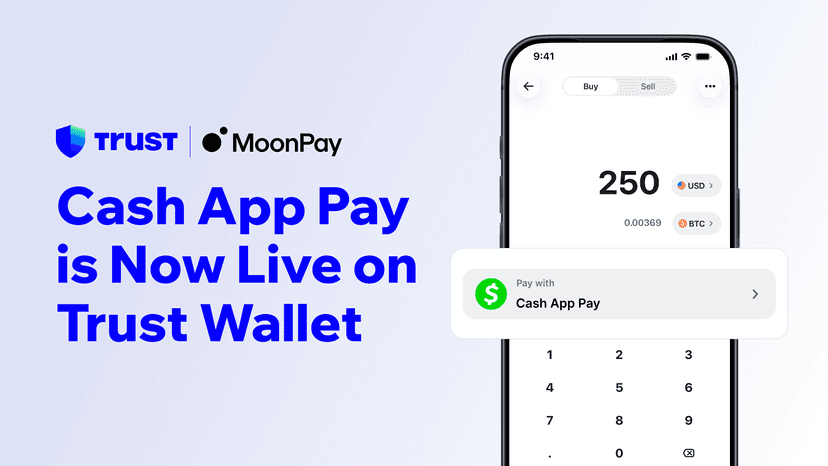
Introducing Cash App Pay, Powered by MoonPay
Trust Wallet has added Cash App Pay as a payment method through MoonPay. Eligible US customers can now use their Cash App balance at MoonPay checkout to buy crypto without entering card details.
Trust Wallet to Sunset Support for Multiple Networks on September 15, 2026
Trust Wallet will sunset support for multiple networks as part of our ongoing efforts to improve product efficiency. If you hold assets on any of these networks, your assets remain yours and remain on their respective blockchains.
How Are Staking Rewards Calculated? APR vs APY Explained
Staking rewards are your proportional share of the new coins a network issues to validators. Learn how the math works and the difference between APR and APY, including why 5% APR is about 5.1% APY compounded daily.
Hot Wallet vs Cold Wallet: Which Do You Need?
A hot wallet is connected to the internet and built for everyday use; a cold wallet keeps keys fully offline for long-term storage. Most people benefit from both — here's how to decide what goes where.
Crypto Self-Custody Security Checklist: 10 Rules
Ten practical rules that address the most common ways self-custody funds are lost: protecting your recovery phrase, verifying addresses, reviewing what you sign, revoking approvals, and the habits that stop scammers cold.
Is Trust Wallet Safe? How Your Crypto Is Protected
Trust Wallet is a self-custody wallet: your keys stay on your device, and a built-in Security Scanner warns you about known risk signals before you sign. Here is exactly how your crypto is protected — and what remains your responsibility.
How the Trust Wallet Security Scanner Works
The Trust Wallet Security Scanner checks transactions on supported networks before you sign: it simulates the real effect, screens destinations against known scam contracts, and warns on risky token approvals — a prompt to look closer, not a guarantee. How it works, what it catches, and what it can't.
Cross-Chain Swaps Explained: How to Swap Between Blockchains
A cross-chain swap trades a token on one blockchain for a token on another — like BTC for ETH — in a single transaction, with bridging handled behind the scenes. Learn how it works, the fees involved, and why it takes longer than a same-chain swap.
What Are Swap Fees? Network, Provider and Hidden Costs Explained
Swap fees break down into three costs: the network gas fee, a provider or liquidity fee, and spread or price impact. Learn what each one is, where hidden costs come from, and why the quoted "you receive" amount is the number to compare.