


What Is a Binary Option?
A binary option is a financial contract that pays a fixed amount if a specific condition on an underlying asset is met at expiry — for example, "Will EUR/USD be above 1.10 at 4:00
PM UTC?" If the condition is met, the holder receives a pre-agreed payout (often $1 or 100% of the stake); if not, the option expires worthless.
Binary options have a similar payoff structure to prediction-market shares — a fixed binary outcome — but the two are distinct products. Binary options are typically tied to asset prices (FX, commodities, indices) over short intraday windows, traded against a broker as counterparty, and have a complex regulatory history that includes outright bans in many jurisdictions.
How Do Binary Options Work?
A trader picks an underlying asset (e.g., gold, EUR/USD) and a strike condition.
They choose a stake and either "Call" (above) or "Put" (below).
The broker quotes a fixed payout if the trader is correct.
At expiry, the asset price is checked against the strike.
If correct, the trader receives the payout; if not, the trader loses the stake.
Binary Option vs Prediction Market
| Feature | Binary Option | Prediction Market |
|---|---|---|
| Underlying | Asset price | Real-world event |
| Counterparty | Often the broker | Other traders (peer-to-peer) |
| Tradable mid-cycle | Limited | Yes — continuous |
| Pricing | Broker-quoted | Order book / AMM |
| Onchain version | Rare | Polymarket, Predict.fun, HIP-4 |
| Regulation | Banned/restricted in many countries | Varies (CFTC event contracts; onchain) |
| Typical horizon | Minutes to hours | Days to months |
Why People Confuse the Two
Both products pay a fixed amount on a binary condition, so the payoff diagrams look identical. The differences are structural:
Counterparty: prediction markets are peer-to-peer; binary options are typically against the broker, which creates a misaligned-incentive problem.
Underlying: prediction markets cover real-world events; binary options track asset prices.
Liquidity: prediction markets aggregate trader demand into a continuous order book; binary options usually have broker-set fixed payouts.
Regulatory standing: binary options have been banned in the EU, restricted in the U.S., and flagged globally for fraud-prone marketing. Onchain prediction markets operate under different (and varying) frameworks.
Use Cases
Binary options: short-term price speculation through regulated brokers, where permitted
Prediction markets: trading event outcomes, hedging real-world risk, probability discovery
Availability
Binary options are restricted or banned in many jurisdictions including the European Union and the United Kingdom. Prediction markets have their own access rules — some are CFTC-registered (Kalshi), others are onchain and restricted in the U.S. (Polymarket).
Binary Options and Trust Wallet
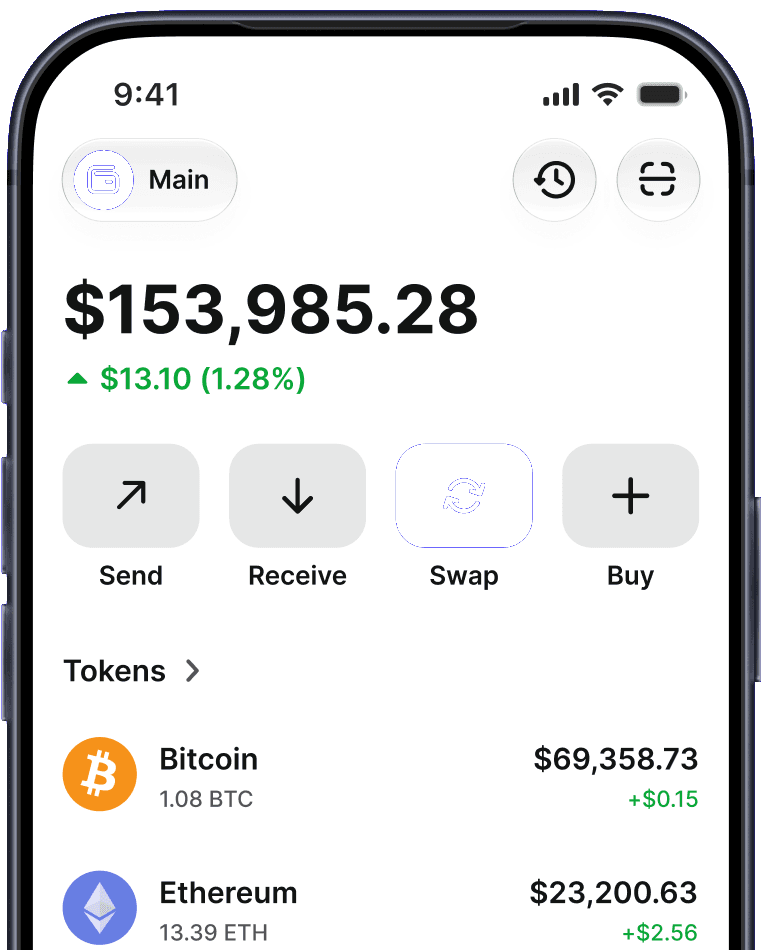
Trust Wallet does not offer binary options. Trust Wallet provides in-app access to prediction-market platforms — Polymarket, Predict.fun, and Hyperliquid (HIP-4) — which are structurally similar in payoff but peer-to-peer, onchain, and tied to real-world events rather than asset prices. Availability varies by region.