




Guides
How to Save Gas Fees on Ethereum?
Partager les articles
En résumé
Learn how to save on Ethereum gas fees with Trust Wallet's sponsorship, Layer 2 solutions, strategic timing, and transaction optimization methods.
Key Takeaways:
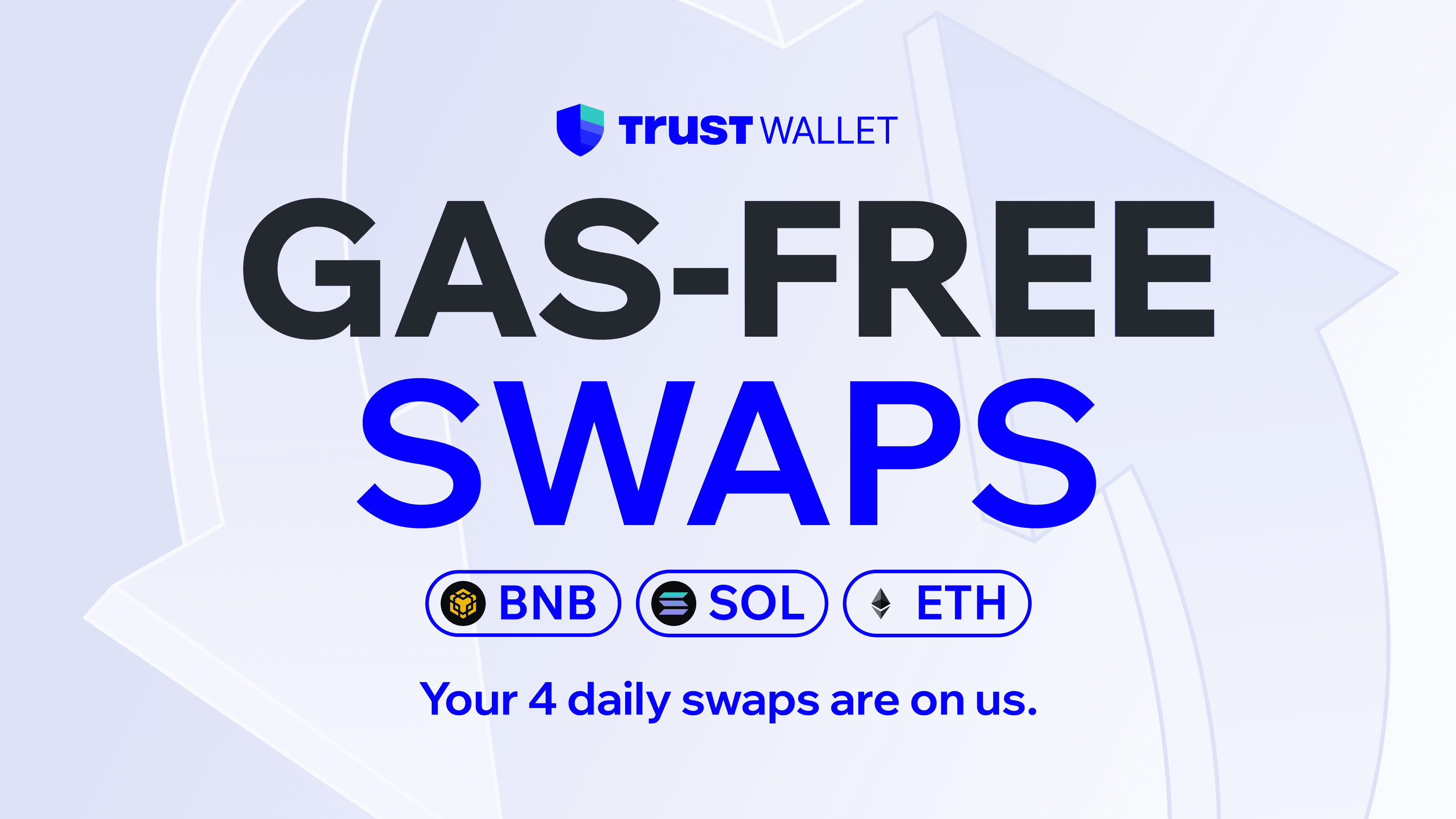
Trust Wallet's Gas Sponsorship covers your Ethereum transaction fees automatically, allowing 4 gas-free swaps daily with a $50 minimum swap amount.
Timing your transactions between midnight and 6 AM UTC, especially on weekends, can reduce gas costs compared to peak hours.
Layer 2 solutions like Arbitrum and Optimism can reduce Ethereum gas fees and maintain security and decentralization.
Ethereum gas fees can make or break your transaction plans. You might have hundreds or thousands of dollars in tokens ready to swap or send, but without that small amount of ETH for gas, your transaction fails. Even when you do have enough ETH, high gas fees can eat into your profits or make small transactions completely uneconomical. In this article, we will explore ways to reduce or eliminate gas fees entirely.
1. Let Trust Wallet Cover Your Gas
Trust Wallet recently launched a Gas Sponsorship feature that removes the gas fee barrier. When you initiate a swap, and your wallet detects you have zero ETH balance, Trust Wallet automatically pays the gas fee for you. This happens instantly, follow the steps below:
Open your Trust Wallet app: https://trustwallet.com/download
Pick a token to Swap on Ethereum
If your ETH balance is 0, Trust Wallet covers your gas fees automatically. Your transaction goes through.
For Ethereum transactions, you can get up to four gas-sponsored swaps per day, as long as each swap meets the $50 minimum amount. The system works in the background. You simply select the tokens you want to swap in your Trust Wallet app, and if you qualify for gas sponsorship, the transaction goes through without you needing to worry about having ETH in your wallet.
2. Use Layer 2 Solutions for Major Savings
Layer 2 solutions process transactions off the main Ethereum chain and can reduce your gas fees. Networks like Arbitrum, Optimism, and zkSync bundle multiple transactions together before submitting them to Ethereum's mainnet, which dramatically lowers the cost per transaction.
Layer 2 platforms maintain Ethereum's security while handling much higher transaction volumes at lower costs. Many DeFi platforms now support Layer 2 networks, making it easy to trade, lend, and interact with applications at a fraction of mainnet costs.
To use Layer 2 solutions, you will need to bridge your assets from the Ethereum mainnet to your chosen Layer 2 network, then conduct your transactions there. When you need to move assets back to mainnet, you bridge them again. Bridging does incur some gas fees, but the savings from conducting multiple transactions on Layer 2 usually outweigh the initial costs.
3. Time Your Transactions Strategically
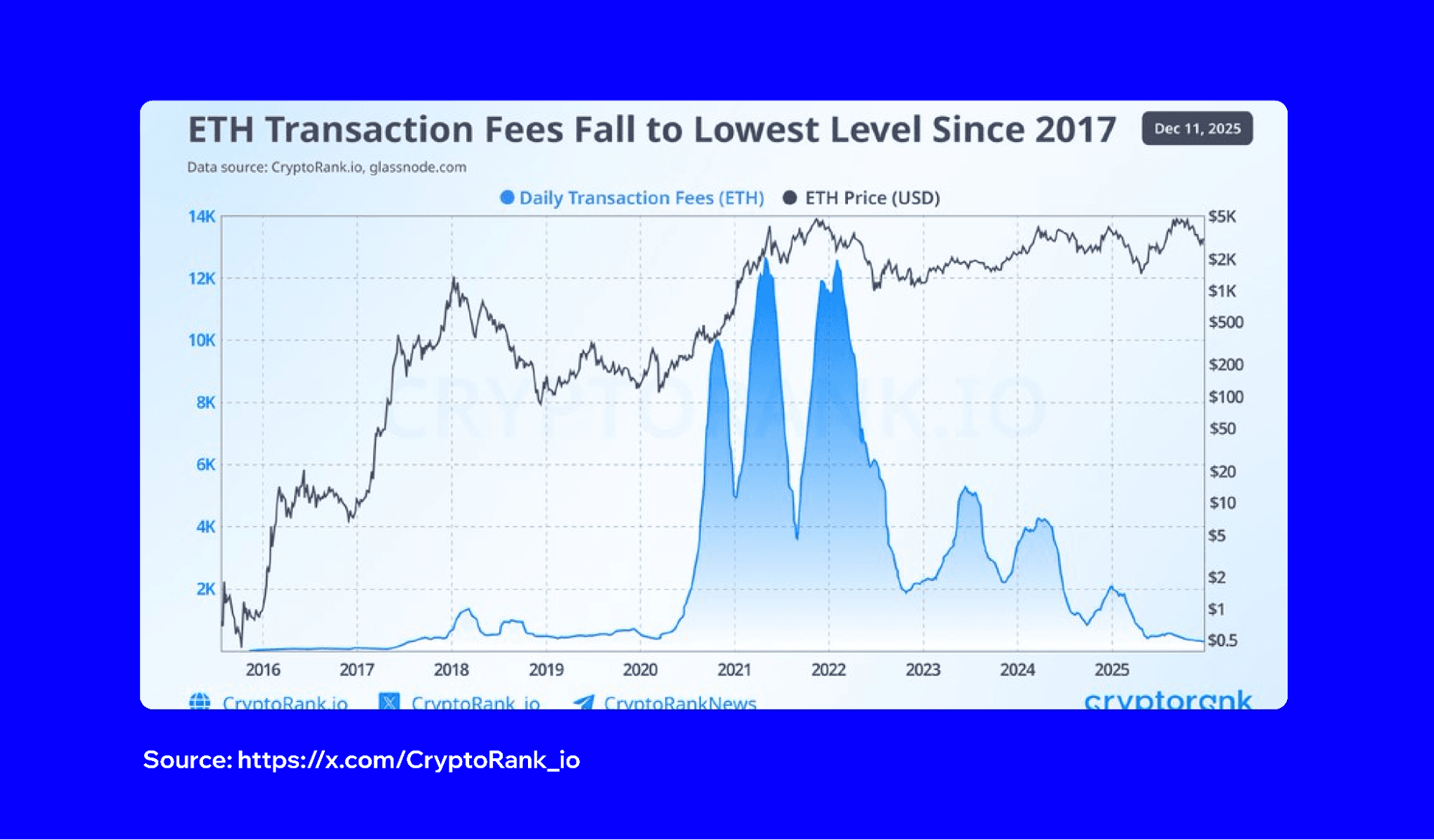
Ethereum gas fees fluctuate based on network demand. The network experiences its lowest congestion between midnight and 6 AM UTC, when both American and European markets are mostly offline. During these hours, you can pay less gas fees compared to peak times.
Weekend transactions generally cost less than weekday transactions. When you combine these patterns, the most economical time to transact can be between midnight and 6 AM UTC on a Saturday or Sunday. If your transaction is not time-sensitive, waiting for these windows can save you gas fees.
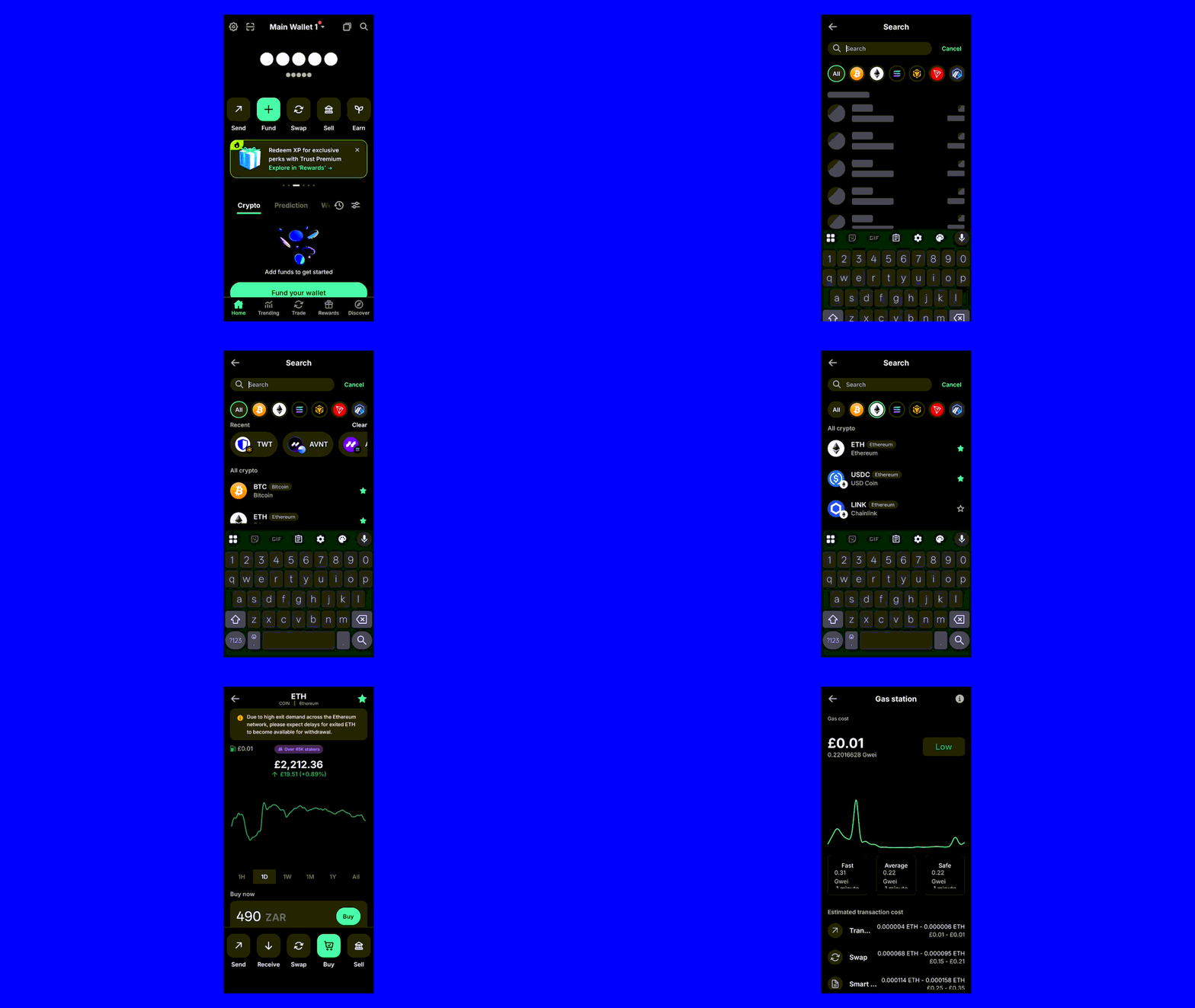
Gas tracking tools like Etherscan Gas Tracker or Blocknative Gas Estimator show you real-time gas prices, helping you identify the optimal moment to submit your transaction. You can also check gas fees in the Trust Wallet app.
4. Batch Your Transactions Together
Every Ethereum transaction includes a base cost to cover signature verification and basic processing. When you send five separate transactions, you pay this base cost five times. Transaction batching lets you pay for it only once.
Batching works through specialized smart contracts. Instead of sending tokens directly to five different addresses, you send one transaction to a batch contract, which then handles all five transfers internally. The single transaction reduces your total gas spend.
Some platforms let you batch operations like token approvals and swaps together, or claim rewards from multiple sources in one transaction. This works particularly well for portfolio rebalancing or any situation where you need to perform several operations at once. Not every platform supports batching, but those that do can generate meaningful savings when gas prices are elevated.
Moving Forward with Lower Fees
Ethereum gas fees no longer need to block your transactions or drain your wallet. Trust Wallet's Gas Sponsorship removes the barrier entirely for qualifying swaps. Layer 2 solutions provide ongoing savings for people who transact frequently. Strategic timing and transaction batching provide other ways to optimize your costs based on your specific needs and schedule.
Whether you're making your first swap or you’re a seasoned Ethereum trader, you now have practical tools to minimize costs without sacrificing control over your assets. Your crypto stays yours, and more of it stays in your wallet where it belongs.
Download Trust Wallet Disclaimer: Content is for informational purposes and not investment advice. Web3 and crypto come with risk. Please do your own research with respect to interacting with any Web3 applications or crypto assets. View our terms of service. Join the Trust Wallet community on Telegram. Follow us on X (formerly Twitter), Instagram, Facebook, Reddit, Warpcast, and Tiktok
Note: Any cited numbers, figures, or illustrations are reported at the time of writing, and are subject to change.