


What Are On-Chain Perpetuals?
On-chain perpetuals are perpetual futures contracts in which every step of the trading process — order placement, matching, settlement, collateral custody, and liquidation — takes
place on a blockchain. This is in contrast to centralized perpetual exchanges, where these functions happen on internal off-chain systems with users trusting the exchange to report
honest balances and trades.
On-chain perpetuals are the core product of decentralized derivatives exchanges like Hyperliquid and Aster DEX. They combine the leverage and flexibility of perpetual futures with the
transparency, censorship-resistance, and self-custody of decentralized finance (DeFi).
How Do On-Chain Perpetuals Work?
A user connects a self-custody wallet to a decentralized perpetuals protocol.
They deposit collateral — typically a stablecoin like USDC — into the protocol's on-chain contracts.
They submit an order (market or limit) which is matched on-chain by the protocol's order book or AMM.
Positions are tracked and marked-to-market by on-chain oracles.
Liquidations happen automatically via on-chain contracts when margin thresholds are breached.
The user can close positions and withdraw collateral at any time without needing permission.
Key Properties of On-Chain Perpetuals
Non-Custodial
Users retain control of their private keys and collateral at all times.
Permissionless
No KYC or account creation is required at the protocol level — any wallet can interact.
Transparent
All trades, positions, funding rates, and liquidations are visible on-chain.
Censorship-Resistant
No single entity can freeze, reverse, or block transactions within the protocol's rules.
Globally Accessible (Subject to Platform Restrictions)
Anyone with an internet connection and a self-custody wallet can interact, though individual platforms may apply geographic restrictions.
On-Chain Perpetuals vs Centralized Perpetuals
| Feature | On-Chain Perpetuals | Centralized Perpetuals |
|---|---|---|
| Custody | User holds keys | Exchange holds funds |
| Account | Not required | Required |
| KYC | Not required at protocol level | Typically required |
| Order matching | On-chain | Off-chain engine |
| Settlement | On-chain | Internal ledger |
| Auditability | Fully public | Exchange reports |
| Counterparty risk | Protocol smart contracts | Exchange solvency |
Leading On-Chain Perpetual Protocols
Hyperliquid — purpose-built L1 with on-chain order book
Aster DEX — multi-chain EVM-based perpetuals with up to 200x leverage
dYdX — pioneer of on-chain perpetuals, now on its own app-chain
GMX — liquidity-pool-based perpetuals on Arbitrum and Avalanche
Use Cases
Self-custody leverage — accessing perpetual futures without giving up custody
Hedging DeFi portfolios — offsetting spot holdings on-chain
Permissionless trading — accessing perps from any wallet without account creation
Transparent settlement — verifying every trade and funding payment on-chain
On-Chain Perpetuals and Trust Wallet
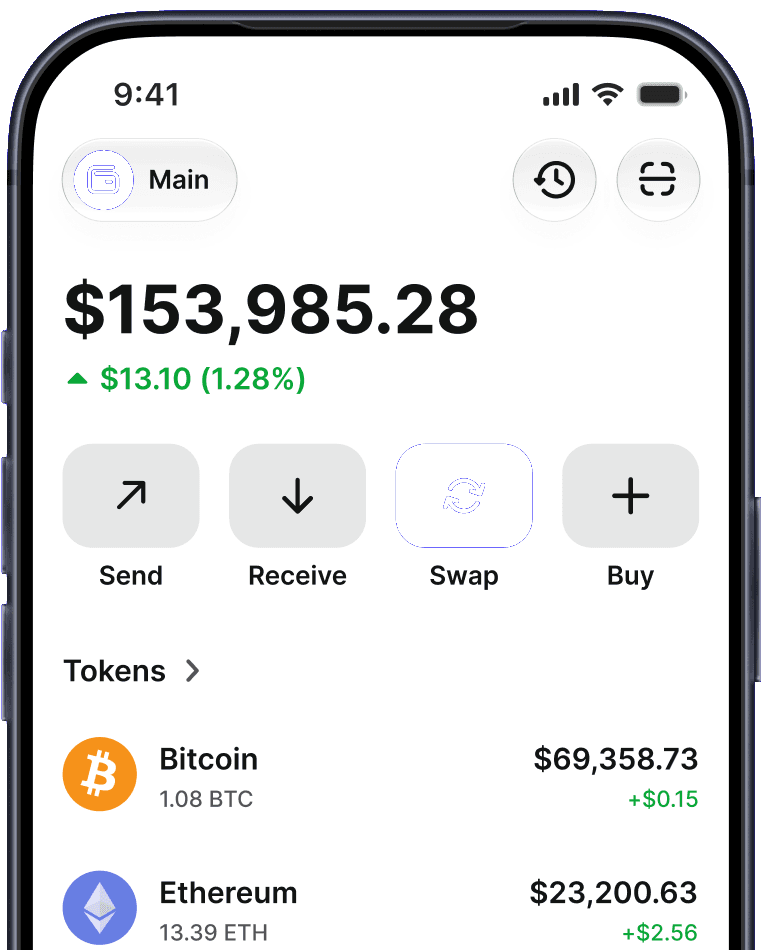
Trust Wallet offers native in-app access to two leading on-chain perpetual platforms — Hyperliquid and Aster DEX — enabling users to trade perpetual futures with leverage up to 200x
while keeping full self-custody of their funds. Perpetual futures trading is not available in all regions.