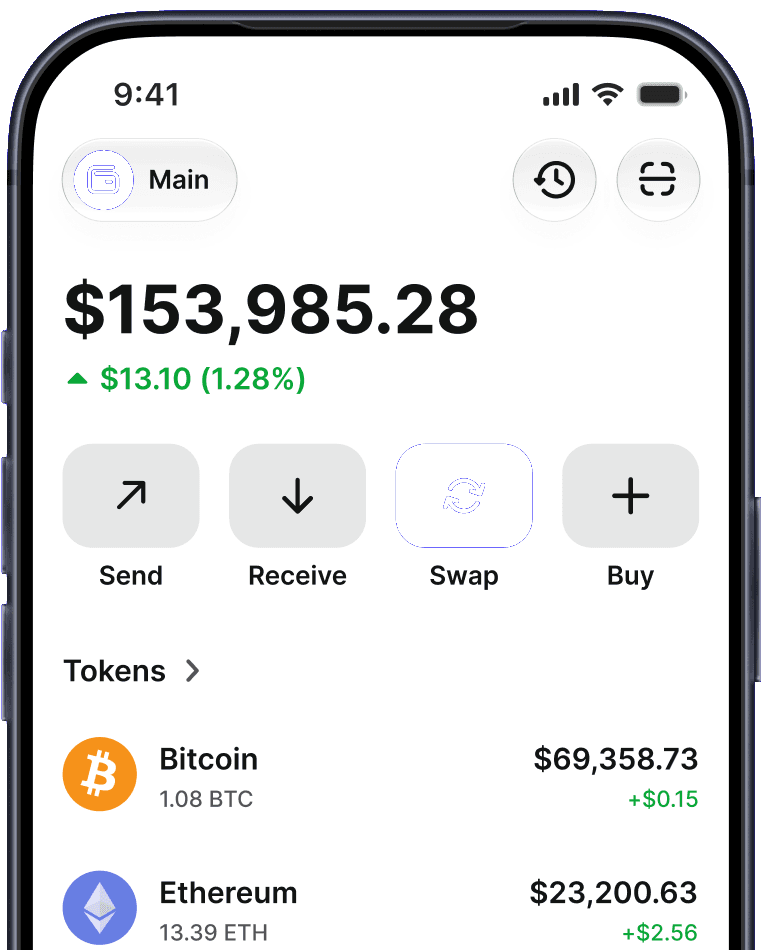


Earn ZetaChain using
Trust Wallet
Staking ZetaChain (ZETA) means locking your coins to help secure the network and earn rewards in return. Trust Wallet lets you stake ZetaChain (ZETA) in a few taps while keeping full self-custody you control your keys, your coins, and your rewards.

How to earn ZetaChain using your Trust Wallet
1. Select the Earn option.
2. Choose ZetaChain (ZETA) and select “Stake”.
3. Select amount you want to stake.
4. Choose validator (staking provider) and confirm.
Get StartedEarning Estimator
Potential earnings from current APR*
Daily Earnings
+ 0 ZETA
Monthly Earnings
+ 0 ZETA
Yearly Earnings
+ 0 ZETA
25+ in-wallet staking options*
 EthereumAPR 2.55%
 SolanaAPR 13.50%
 TronAPR 4.39%
 PolkadotAPR 14.66%
 BNB Smart ChainAPR 1.34%
 CosmosAPR 14.65%
 NativeInjectiveAPR 8.53%
 NEARAPR 8.09%
 SuiAPR 1.47%
 OsmosisAPR 1.94%
 TerraAPR 15.00%
 NativeZetaChainAPR 8.99%
 CardanoAPR 4.69%
 NativeEvmosAPR 0.00%
 StargazeAPR 0.00%
 CryptoOrgAPR 3.99%
 KavaAPR 7.48%
 KusamaAPR 15.45%
 StrideAPR 1.17%
 TezosAPR 2.20%
 JunoAPR 26.56%
 AkashAPR 3.78%
 AgoricAPR 7.05%
 AxelarAPR 12.99%
 SeiAPR 3.82%


Contribute to Blockchain

Participate in network security and decentralization.
Learn about DeFi

Explore more chains and expand your earning journey across DeFi.
Explore ZetaChain (ZETA)
Track the live ZetaChain price, convert ZETA to USD and other currencies, and buy ZetaChain — all in self-custody inside Trust Wallet. Your keys, your crypto, across iOS, Android, and the browser extension.
Trust Wallet is one of the highest-rated self-custody crypto wallets.
Rated 4.7 on the App Store and 4.6 on Google Play, across 2.7M verified reviews – trusted by millions of users on iOS and Android.


Frequently asked questions
- Staking involves locking up your crypto to participate in maintaining and securing a blockchain network. By doing so, you help keep the network decentralized and robust against attacks. In return, you earn rewards such as additional coins. It's more than just a way to grow your portfolio—you're actively contributing to the network's health.
- In staking, a validator is a node that participates in maintaining the blockchain by validating transactions and creating new blocks. They ensure the network's integrity and receive staking rewards for their work.
- Staking involves locking up your cryptocurrency on-chain to help secure and operate a blockchain network, earning you rewards for your participation. Lending is the act of loaning your cryptocurrency, either on-chain or off-chain, to earn interest. Yield farming is a more complex, on-chain activity where you provide liquidity in decentralized finance protocols to potentially earn yield. With Trust Wallet you can stake without leaving the wallet. You can also also connect any Web3 dApp that offers earning opportunities such as lending, borrowing, and yield farming protocols.
- While using Trust Wallet, you're interacting directly with decentralized protocols, whether you decide to use in-wallet earn options or earn opportunities via Web3 dApps. Risks may include smart contract vulnerabilities, market volatility or other factors. Trust Wallet is an interface to these services and doesn't control the underlying protocols. It's important to conduct your own research before staking with any protocol.
- ZetaChain staking through Trust Wallet is non-custodial — your ZETA stays in your wallet at all times. Trust Wallet never holds your private keys or your staked balance. The main risks are validator slashing (if you delegate to a misbehaving validator), smart-contract bugs (where applicable for liquid-staking protocols), and ZETA market price volatility during the staking period. Choose validators with high uptime, reasonable commission rates, and a clean operational track record to minimize slashing risk.
- Your principal ZETA cannot be confiscated by Trust Wallet — you retain full self-custody. However, partial losses can occur in two specific scenarios: (1) slashing, where the network protocol penalizes validators for misbehavior (downtime or double-signing) and reduces a portion of all delegated stake; (2) market price drops — if ZETA falls in price during the staking or unstaking period, the fiat value of your holdings declines even though your token quantity stays the same. Slashing on most major networks is rare and capped at small percentages for routine offenses.
- Yes. Trust Wallet is fully non-custodial — your private keys never leave your device and your staked ZETA remains attributable to your wallet address on-chain at all times. Trust Wallet acts as the interface for delegating to validators; it does not hold, transfer, or have any authority over your funds. You can verify your delegation balance directly on a public blockchain explorer using your wallet address.
- Unstaking periods are set by each blockchain's protocol, not by Trust Wallet. Common ranges across major networks: Ethereum (validator-exit queue + withdrawal, typically days to weeks depending on network conditions), Solana (cooldown ~1–2 epochs, roughly 2–4 days), Cosmos / ATOM (21 days), Polkadot / DOT (28 days), Tron / TRX (14 days). During the unstaking period your ZETA is locked and stops earning rewards. Plan ahead if you may need liquidity before the lockup ends.
- If a validator commits a slashable offense — extended downtime, or signing two conflicting blocks — a percentage of all delegated stake (including yours) can be burned by the network protocol. Slashing severity varies by network: typically 0.5–1% for downtime, and up to 5–100% for severe double-signing offenses. To minimize this risk, delegate to established validators with high uptime (>99%), reasonable commission rates, and a clean track record. You can switch validators at any time, but the unstaking period applies before you can re-delegate the affected stake.